A dust cover is a flexible barrier that rides on a moving machine part and keeps chips, cutting fluid, oil mist and dust off the sliding surfaces underneath. It expands and contracts with the stroke, folds into a small space at the end of travel, and follows the movement without adding resistance to the axis it protects.
Covers fail at the fold and at the clamp. A shallow convolution tears at the inner fold; a cover that is too long balloons and rubs against the machine; an end ring that is not reinforced pulls off the mounting face. Chips trapped in a fold cut through the wall, and a cover that has lost its clamp no longer keeps coolant out. These are geometry failures, so the stroke and the space around it matter as much as the compound.
Stock covers fit stock strokes. Custom production starts when the stroke, the mounting envelope, the coolant or the temperature falls outside the catalog, or when the cover has to be transparent so an operator can see the screw or rail without removing it.
Variant range
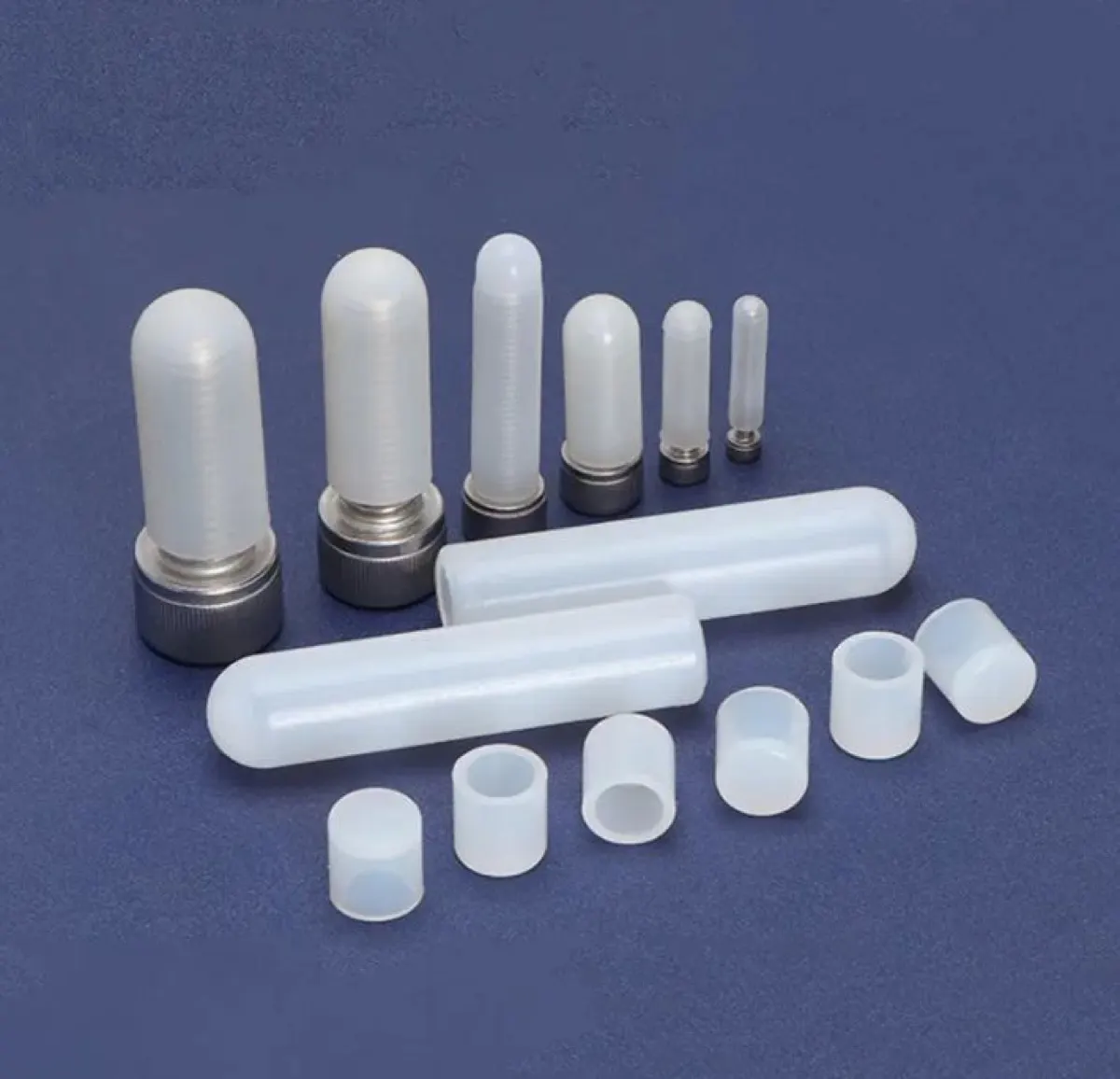
The construction follows the stroke and the mounting space: convolutions for long travel, flat sleeves for short travel, and formed shapes where the cover has to clear a joint or a housing.
| Variant | Construction | Typical use |
|---|
| Convoluted bellows cover | Seamless molded convolutions with reinforced end rings | Ball screws, linear rails and cylinder rods |
| Flat sleeve cover | Molded or fabricated flat sleeve | Short-stroke actuators and rod protection |
| Transparent bellows | Transparent silicone, molded convolutions | Ball screws and rails that need visual inspection |
| Cylinder rod boot | Convoluted boot with matched end fittings | Hydraulic cylinders and pneumatic rods |
| Steering and CV joint boot | Molded convoluted boot | Automotive steering gear and CV joints |
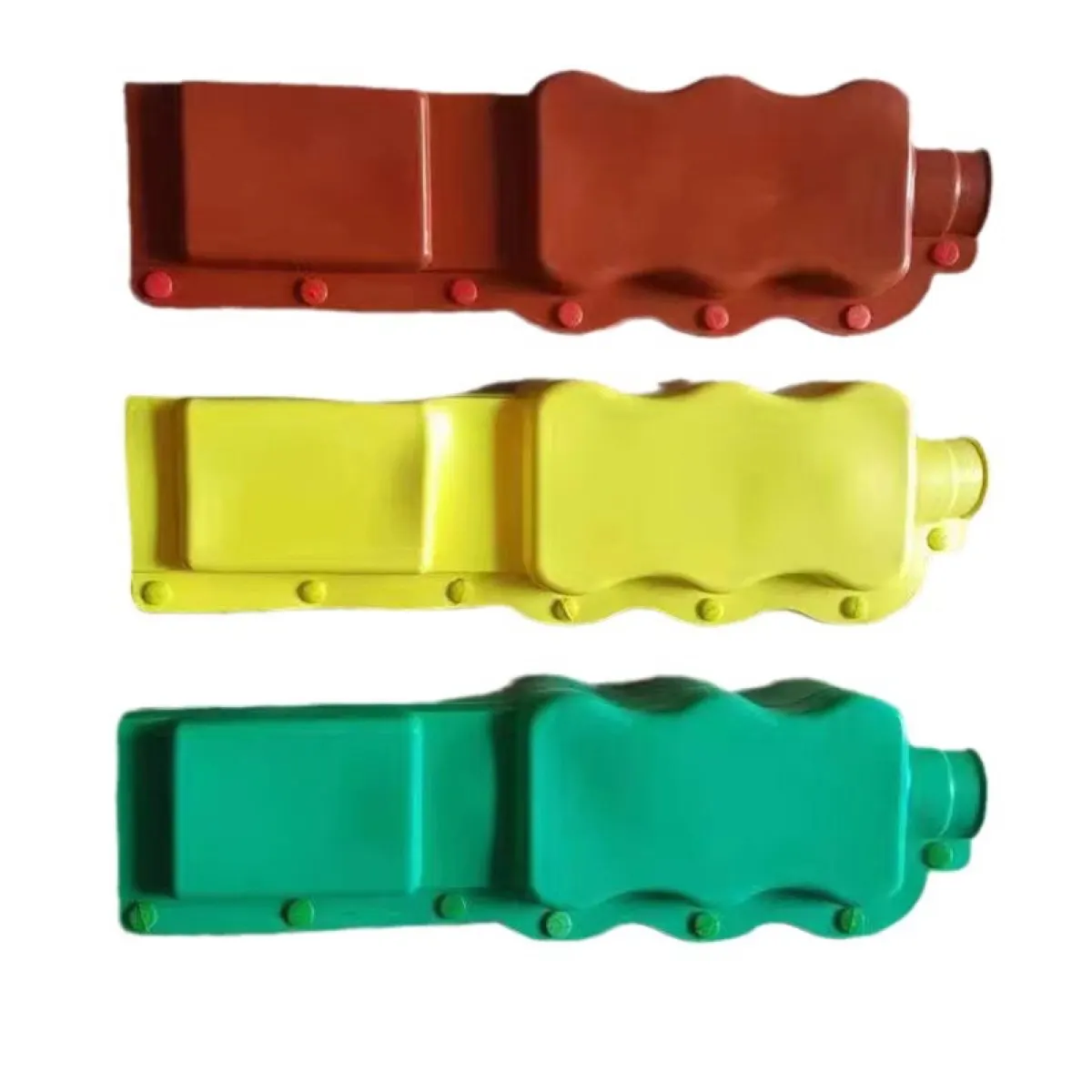
| Robot joint cover | Custom formed shape with end fittings | Robotics joints and arms |
| Weather cover, outdoor | Neoprene construction | Outdoor equipment and lifting mechanisms |
Material selection
Silicone is the default where heat or hot oil splash is present: the grades hold -40°C to 200°C, resist oil and keep elasticity through the full stroke, which is what a machine-tool cover needs when hot chips and oil mist land on it all shift. Its non-stick surface lets chips slide off instead of building up in the folds.
Neoprene takes weathering and coolant duty: outdoor equipment, washdown areas and machines where coolant rather than hot oil dominates. TPE covers the same constructions where its feel and finish suit the part. Transparent grades are available in silicone, for maintenance staff who must see the screw or rail without pulling the cover.
Temperature decides the family first. A cover running above the silicone ceiling hardens and cracks at the folds, so the answer is a different design, not a different color. Below the ceiling, silicone versus Neoprene comes down to oil splash against weather and coolant.
How it is made
Covers are molded and fabricated. Convolutions are molded as one seamless piece, so no seam splits at the fold, and wall thickness is set from the stroke and collapsed length rather than a catalog table. Reinforced rings and end fittings are molded in or bonded on, matched to the machine face.
Shape, convolution count and wall thickness are designed from the stroke and mounting space you send. Tooling is quoted in 7 days, samples follow in 7–12 working days, and the first article is fitted or checked against the drawing before release. For movement compensation in a pipe, rubber bellows are the pressure-tight part.
Where it is used
CNC machines are the largest application: ball screw and rail covers that keep chips and coolant off the ways, plus slideway and tool changer protection. Hydraulic cylinders and pneumatic rods use rod boots to keep dust out of the gland; linear guides, actuators and lift columns use the same construction over a shorter stroke.
Automotive covers steering gear and CV joint boots, where the cover also holds grease. Robotics uses joint and arm protection, often a formed shape rather than a plain bellows, and outdoor equipment and lifting mechanisms use the Neoprene build. Where a cable passes through a cover or a housing, a cable grommet closes the entry.
Quality and documentation
Covers run under ISO 9001, ISO 14001 and IATF 16949 systems, from compounds meeting RoHS and REACH. Compound and reinforcement are checked on receipt, convolutions in process, and every cover gets 100% visual final inspection. Material certificates and first-article reports ship with the order; ring dimensional reports on request.
What to send for a quote
Send the stroke, mounting space and collapsed length, plus the rail, screw or rod dimensions to clear. Name the media — chips, coolant, oil mist, dust — the temperature, and whether the cover must be transparent. Add the mounting method, annual quantity and target price; we return a convolution count and end fittings. Send a sketch with the stroke marked and we will size the convolutions.