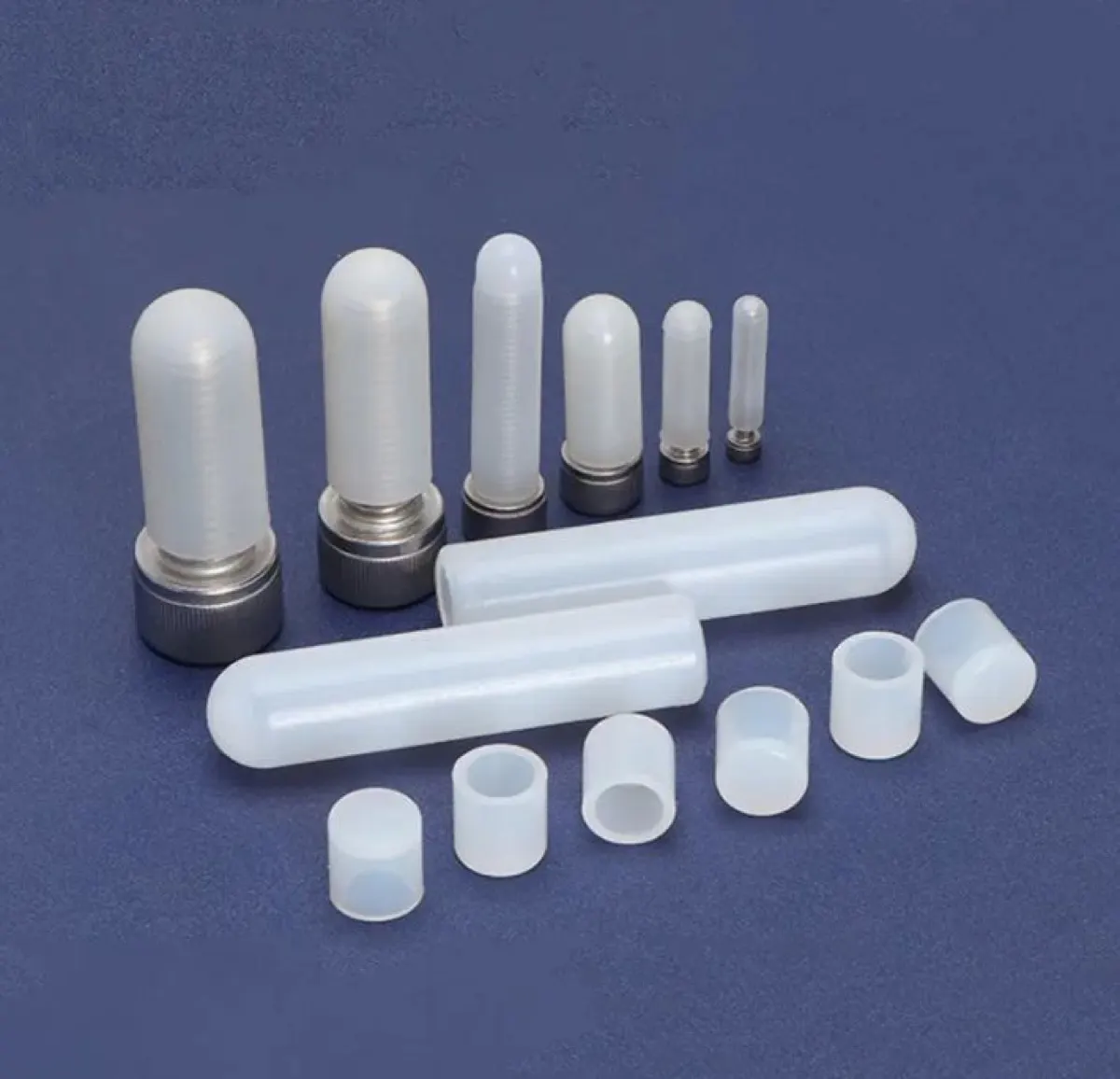
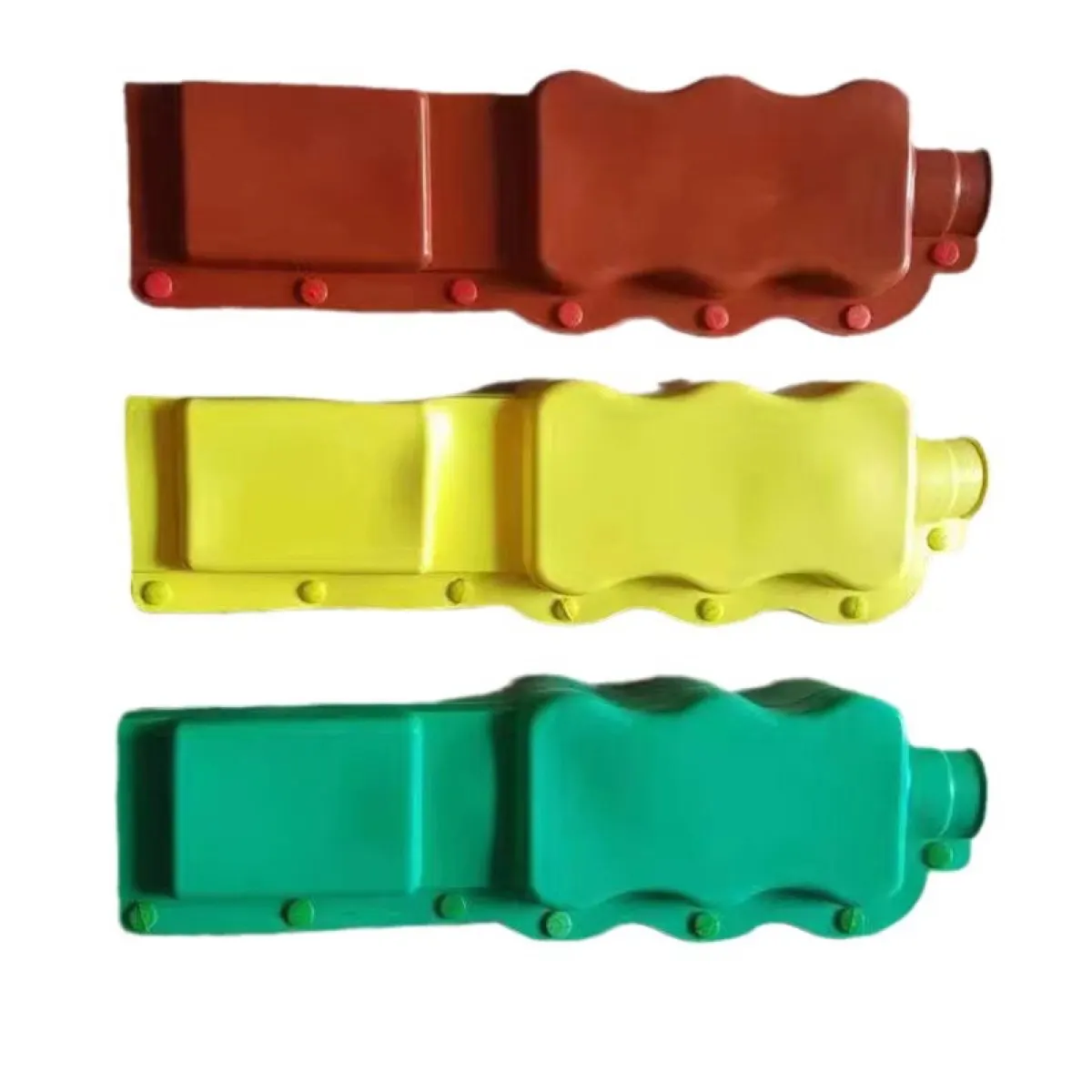
A silicone case or sleeve is a molded cover that stretches over a tool, instrument or device and stays there by elasticity. No adhesive, no screws: the compound grips the substrate, wall thickness sets impact absorption, texture decides whether the hand slips.
Covers fail on fit rather than on compound. A wall that is too thin tears at a corner after a few drops; a wall that is too thick springs off the device or buries the buttons; a hard grade protects the housing but feels slick in a gloved hand; a soft grade grips well but collapses under a clamp. Heat is the second failure path: a sleeve on a hot tool or valve body must hold shape at the temperature the part reaches. Cuts and abrasion come third, at the edges where the cover meets metal.
Stock sleeves fit stock products. Custom molding starts when the cover must follow drafted walls, place a logo exactly, match a Pantone reference, or insulate a hot handle and survive a drop test at once.
Variant range
Wall thickness, hardness, finish and logo method are the four choices behind every cover. These are the builds we produce most often.
| Variant | Construction | Typical use |
|---|
| Tool grip sleeve | Compression-molded silicone, soft Shore A 30, matte texture | Power tools and instrument grips |
| Device skin | Injection-molded wall, matte or glossy finish, in-mold logo | Drones, remote controls, handheld terminals and tablets |
| Medical handle cover | Food- and medical-grade silicone, smooth finish | Medical device handles and probes |
| Test-equipment boot | Molded sleeve, firmer grade, debossed texture | Electronic test equipment and connectors |
| Appliance handle sleeve | Molded silicone, matte finish | Kitchenware and appliance handles |
| Valve and pipe sleeve | Molded protective sleeve, firmer grade | Valve and pipe protection |
| Branded sleeve | Debossed or embossed logo, Pantone color matching | OEM products that carry a brand |
Material selection
Silicone is the whole material family, and the specification is set by hardness and temperature. Shore A 30–70 covers the useful band: soft grades near 30 give the non-slip grip wanted on hand tools and medical handles, while firmer grades toward 70 hold shape around housings and valve bodies.
The -60°C to 230°C range is what separates silicone from most flexible covers: it stays elastic on a hot tool just out of service and on outdoor equipment left in the cold, without taking a permanent set. Above that range the cover is the wrong approach and the housing needs a different design.
Food-contact and medical-grade silicones are available for handles, probes and kitchenware, and should be named at quotation so compound and documentation are fixed together. Finishes run matte to glossy, with debossed or embossed textures adding grip without a coating; logos go in-mold, by silk screen or engraved.
A sleeve is a cover, not a seal: where the joint must keep water or dust out, a gasket or an O-ring does that job.
How it is made
Compression and injection molding both run in-house. The tool is cut from a drawing, a 3D file or a physical sample, and the first shots are used to tune wall thickness, hardness and texture against the real device. Logos and textures are cut into the tool when the volume justifies it, so the mark is molded rather than added later; silk screen and engraving cover late changes.
Tooling is quoted in 7 days and samples follow in 7–12 working days. First-article checks compare the sample to the drawing and to the customer's device, and every shift is checked in process before the run continues.
Where it is used
Power tools and instrument grips are the classic case: a soft sleeve over a metal housing that insulates the hand from heat and vibration. Medical handles and probes use the same geometry with a medical-grade compound and a cleanable surface.
Test equipment and connectors call for a firmer wall that protects the housing without hiding the ports. Kitchenware and appliance handles use silicone for heat insulation and soft touch; valve and pipe sleeves protect operators from hot metal. Drones, remotes and outdoor skins combine impact protection with UV and color; handheld terminals add corner cushioning and a non-slip back.
Where the cover has to seal a cable entry as well, cable grommets close the opening, and for corner impact on the same housing, rubber bumpers take the hit instead of the sleeve.
Quality and documentation
Covers are molded under ISO 9001, ISO 14001 and IATF 16949 systems, from compounds meeting RoHS and REACH. Incoming compound is checked, first articles are measured, each shift is checked in process, and every part gets 100% visual final inspection. Material certificates and first-article reports ship with the order.
What to send for a quote
Send a drawing, 3D file or sample, plus the device dimensions the cover must fit. State wall thickness, hardness band, color reference, logo artwork and finish. Add annual quantity, target price and packaging, and we propose a tool layout and quote. Send one sample part or a 3D file and we will start the tool design.