A bumper is a part designed to be hit. Mounted at the end of a stroke, on a door frame or on the corner of a moving carriage, it takes kinetic energy over a short distance and gives it back as a much lower force over a longer time. The rubber deforms, internal friction turns part of the energy into heat, and the structure behind the bumper sees a softer event than metal-on-metal contact would produce.
Geometry decides how that feels. A solid cylinder is stiff and progressive: it takes heavy, repeated impacts and stops a load quickly. A hollow or honeycomb section collapses more gently, which is what delicate panels need. Hardness does the rest, from ultra-soft 15A foam that cushions a closure to Shore A 90 that stops a press ram.
Bumpers fail by taking set, by tearing at the fixing, and by hardening. A part hit off-center or in shear peels at the insert; a part undersized for the energy bottoms out and passes the shock into the frame. Ozone cracking can appear on outdoor doors and gates, and a bumper that has gone hard no longer absorbs anything.
Custom work starts when the installation space is fixed, the impact speed is high, the load is delicate, or the bumper has to work outdoors, in washdown, or against a specific mounting pattern. In those cases the section, the compound and the fixing are designed together.
## Variant range
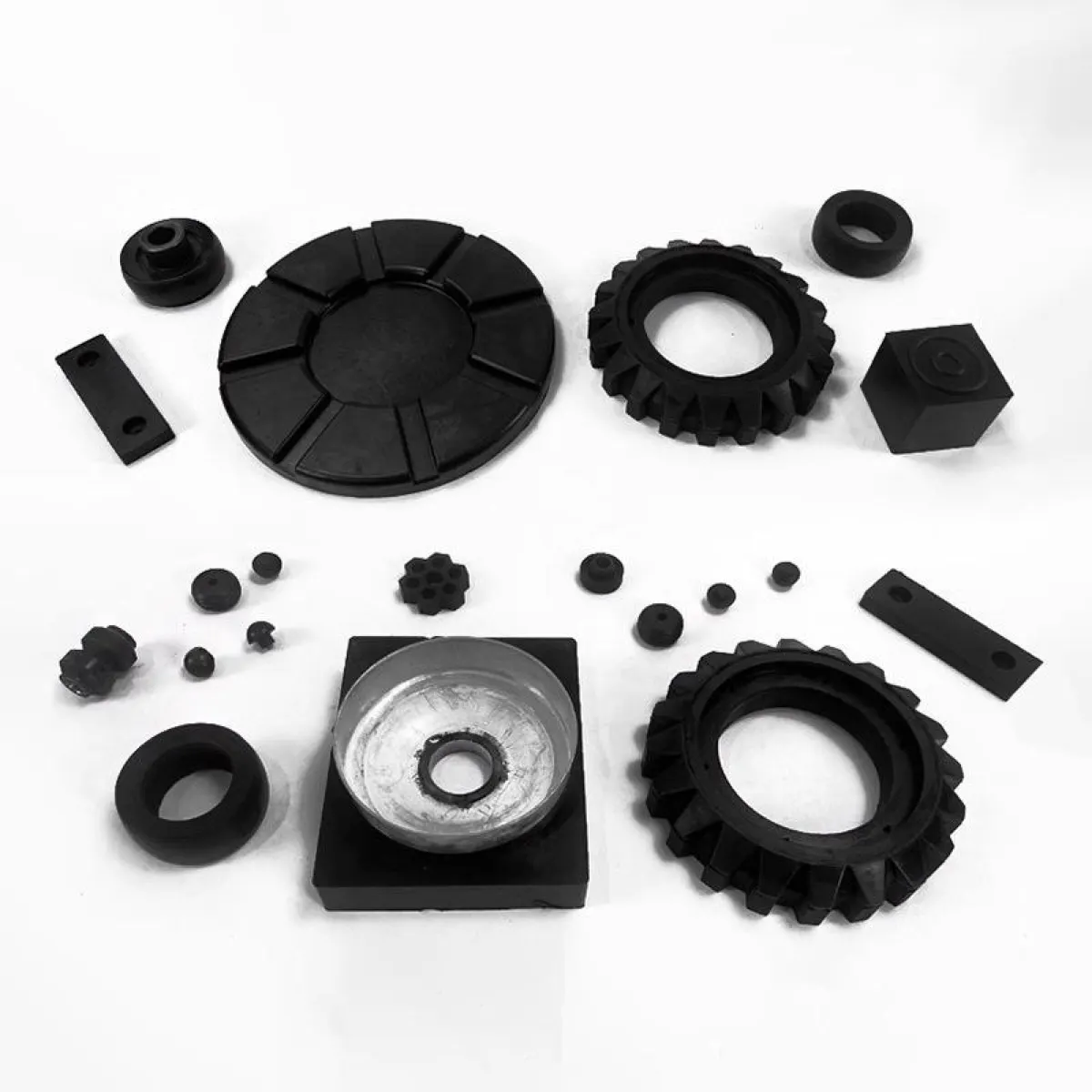
The sections below cover the shapes in this line; each can carry a metal insert, a bolt-through fixing or adhesive backing.
| Variant | Construction | Typical use |
|---|
| Solid cylinder | Molded NR, SBR or polyurethane cylinder | Air-cylinder stroke ends, limit stops |
| Hollow cylinder | Molded tube section with an open core | Softer stops for lighter carriages |
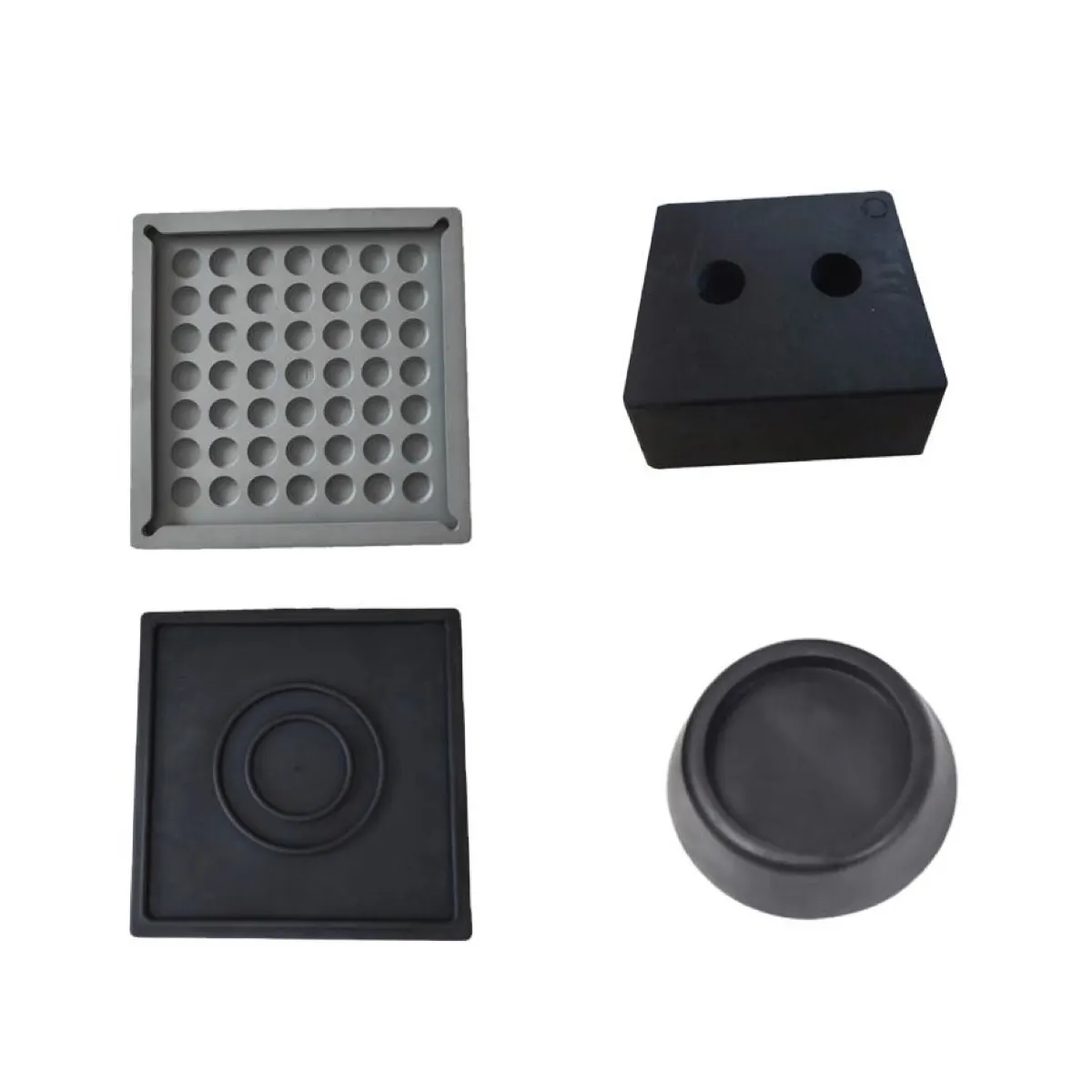
| Honeycomb block | Molded block with internal voids | Delicate panels and closures |
| Rectangular block | Molded block to the drawn section | Machine tools, dock and door stops |
| Molded pad | Flat pad molded to the drawn section | Furniture hardware, small closures |
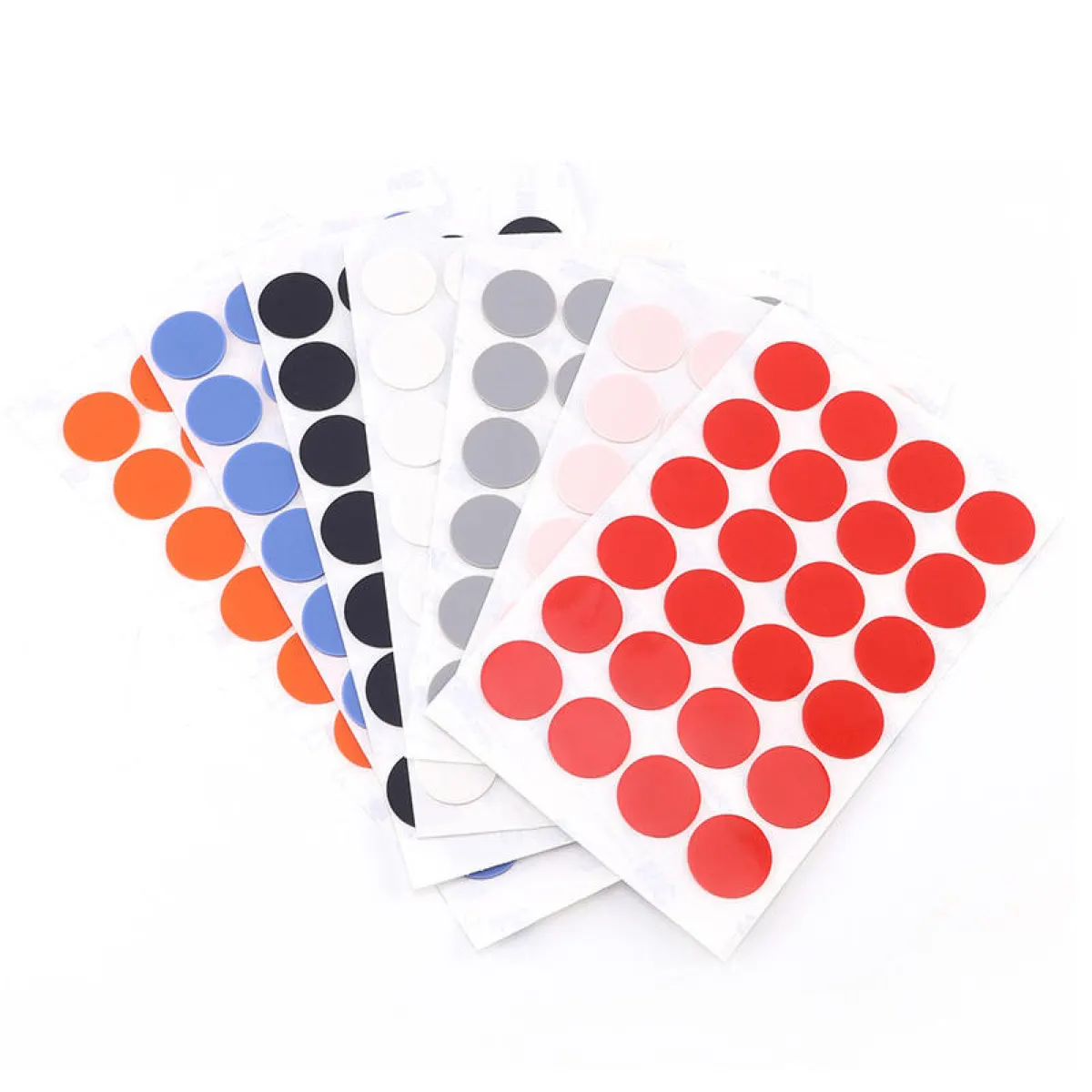
| 15A foam pad | Ultra-soft foam grade, die-cut or molded | Light panels and silencer duties |
| Studded bumper | Metal insert or threaded stud molded in | Bolt-on mounting on frames |
## Material selection
NR and SBR cover general duty: door stops, drawer bumpers, machine stops and general industrial contact. They are resilient and mold well into blocks and cylinders.
Polyurethane is added where the surface sees cutting or abrasion, such as sheet stops. It holds a sharper edge and resists wear better than a general rubber, at some cost in resilience.
Silicone is chosen for heat and outdoor exposure: door frames, gates, and equipment that sits in sun or near a hot process. It keeps its elasticity where NR would harden, and it does not need a metal frame to work.
Hardness runs from ultra-soft 15A foam to Shore A 90. The soft end is for panels and closures where the bumper must not mark or deform the part it meets; the hard end is for stroke ends and limit stops where the job is to stop mass quickly. A bumper loaded in shear needs a mechanical fixing rather than adhesive, whatever the compound.
## How it is made
Bumpers are molded, which is what allows a hollow core, a honeycomb section or a metal insert to be placed in the tool. NR, SBR and silicone are mixed and cured in house; polyurethane is molded to the same drawing. Inserts are positioned before the tool closes so the rubber bonds around them.
Custom profiles need new tooling, quoted in 7 days, with samples in 7–12 working days. Impact and compression-cycle testing is available on request, which is how a new section is checked before release.
## Where it is used
Automation uses bumpers at air-cylinder stroke ends and slide limits. Logistics uses them on shuttle carts and AGV collision points. Elevators and cranes use car buffers and hook limit cushions; automotive uses door limit stops, tailgate buffers and suspension bump stops. Furniture hardware uses small silencers, machine tools use ram, press-brake and sheet stops, and doors, gates and dock levelers use large molded stops. Where the problem is continuous vibration rather than a single impact, a rubber mount or anti-vibration pad is the better choice.
## Quality and documentation
Bumpers run under ISO 9001, ISO 14001 and IATF 16949 systems, from compounds compliant to RoHS and REACH. Inspection covers incoming material, in-process checks and 100% visual final inspection. Impact and compression-cycle testing is available on request, material certificates ship with every order, and batch traceability is kept for each lot.
## What to send for a quote
Send the installation space, the impact speed and the moving mass, the direction and frequency of impact, the fixing method available, the quantity, target price and any standard. A photo of the mounting point and the part that hits it is often enough to start. We will propose a section, a hardness and a compound, then quote tooling in 7 days.