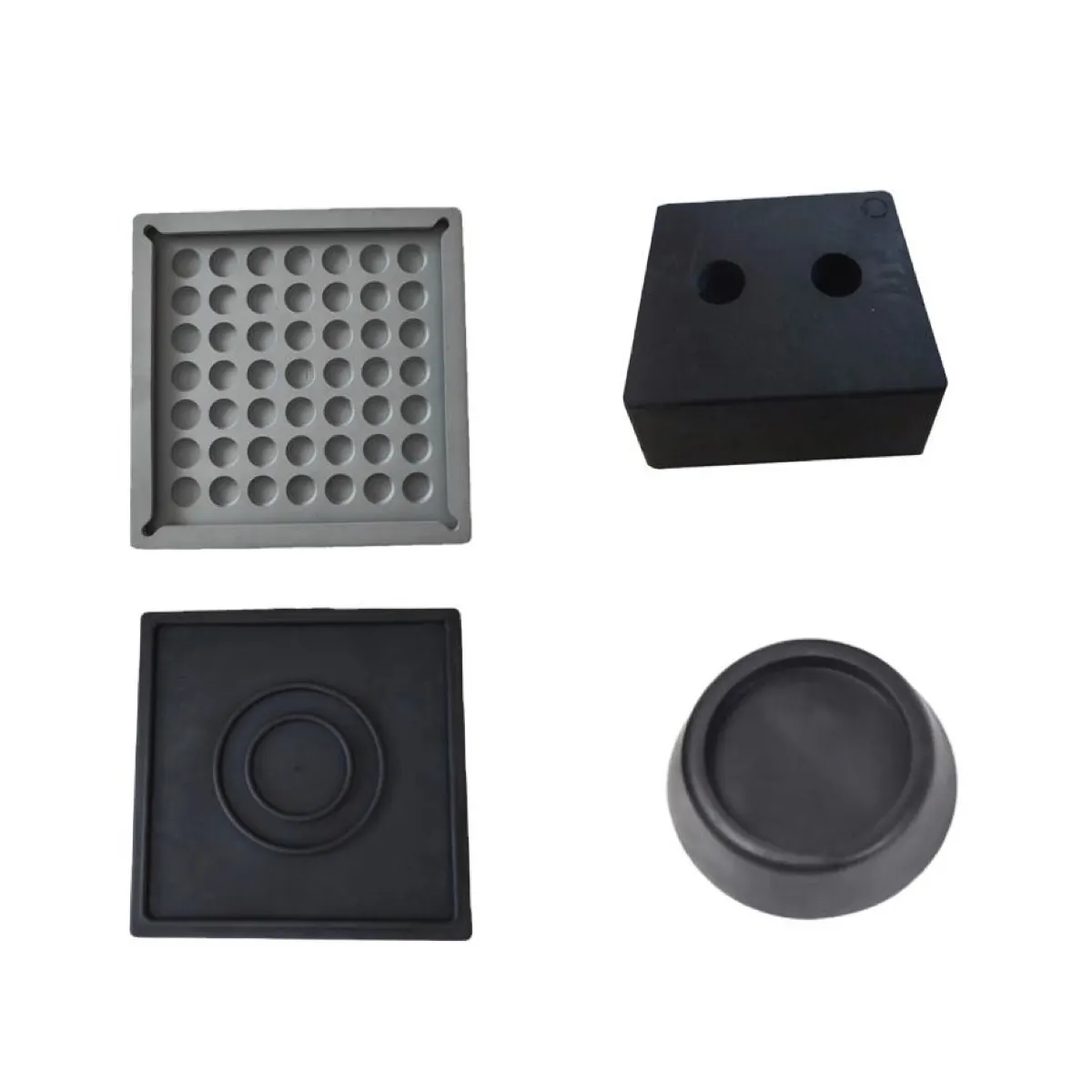
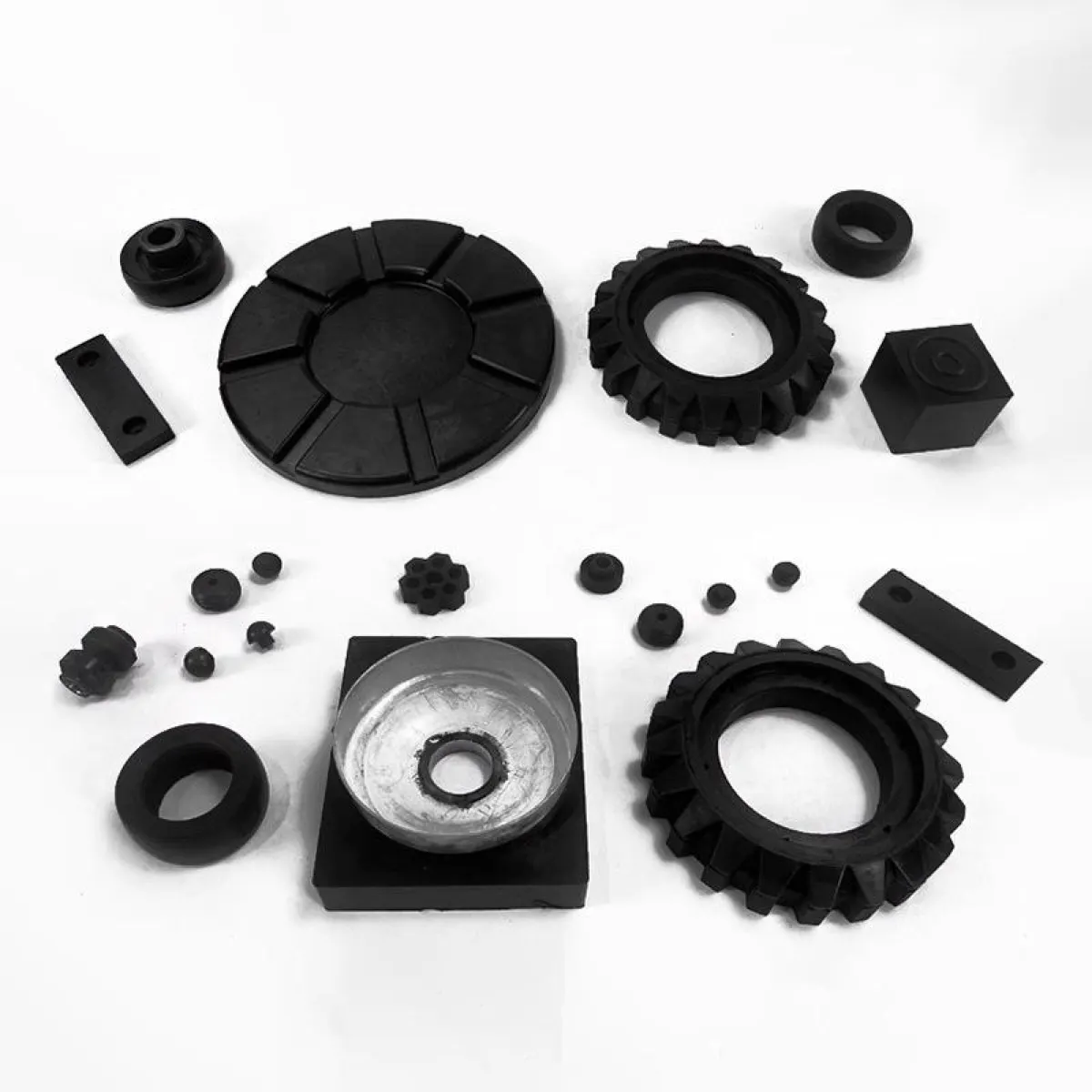
A rubber mount is a spring made of elastomer. Bolted between a machine and its frame, the element deflects under the static weight of the equipment, then absorbs the alternating forces that a pump, motor or compressor pushes into the structure. Because the rubber is vulcanized to metal, the mount also carries the load and holds the bolt pattern while it isolates.
Isolation works only when the mount matches the disturbance. Too stiff and vibration passes through; too soft and the machine moves, couplings misalign and the element bottoms out. The design output is a load-deflection curve checked against equipment weight and running speed, not a hardness number alone.
Failures arrive slowly. Compression set flattens the element until the machine sits lower and the bolts lose preload. Heat and ozone stiffen the surface and open fine cracks at the most stressed fillet. Tearing starts at a sharp insert corner or a bond edge when the mount is asked for more shear than its deflection allows. The bonded joint is the other weak point: poor metal preparation or a contaminated compound lets the rubber peel off the plate, and the equipment starts to walk on its fixings.
Catalog isolators are picked by thread size and static load, which is enough while machine, speed and envelope stay inside the catalog. Custom work begins when the weight is unusual, the mounting points are fixed by an existing frame, the equipment runs near a resonance, or the mount has to survive outdoor, washdown or marine service. Where the floor is the only interface, anti-vibration pads often do the job with less hardware.
## Variant range
Every variant uses the same vulcanized rubber-to-metal bond; they differ in how the part is fixed and which compound suits the service environment.
| Variant | Construction | Typical use |
|---|
| Bonded plate mount | NR or SBR element vulcanized to a zinc-plated steel plate | Pumps, fans and compressors bolted to a frame |
| Stud mount | Rubber section bonded between threaded studs | Motor and compressor feet with tapped holes |
| Bolt-through mount | Bonded plate with clearance bolt holes | HVAC units, cooling towers, generator sets |
| Threaded-insert mount | Inserts molded into the rubber for repeatable torque | Equipment removed for service |
| EPDM outdoor mount | EPDM element on a zinc-plated or stainless frame | Rooftop plant and outdoor power units |
| Stainless-frame mount | NR or SBR element on a stainless frame | Marine engines, deck machinery, washdown areas |
| Custom-profile mount | New tooling cut to the envelope and bolt pattern | Retrofits and tight installation spaces |
## Material selection
Natural rubber gives high resilience and is the default for general machinery indoors on a rigid frame. SBR behaves similarly for the same general duty. Both bond to zinc-plated steel for ordinary factory air.
EPDM is the outdoor answer. It resists weather and ozone better than NR, which is why cooling towers, rooftop HVAC and outdoor power units specify it. Moving from NR to EPDM means adjusting the formula, not copying it, so the curve stays predictable.
Hardness from Shore A 45 to 75 sets the starting point. Soft compounds deflect further and isolate low-frequency disturbance better; harder ones carry more load in the same envelope and resist creep under a static offset. Formula adjustment keeps stiffness linear within the specified deformation range, so the mount does not stiffen abruptly. Metal finish follows the environment: zinc-plated steel indoors, stainless where plating would fail.
## How it is made
Compounds are mixed in house, then molded and vulcanized directly onto prepared metal. Bonding is the critical step: the insert is degreased, primed and cured against the rubber under heat and pressure to reach a high peel strength. Inserts, studs and plates are positioned in the mold, and every part gets a 100% visual final check.
Custom profiles need new tooling, quoted in 7 days. Samples follow in 7–12 working days, and in-mold marking or Pantone color is settled at the sample stage so the production tool carries it.
## Where it is used
Industrial machinery is the core: pumps, fans, compressors and generators on skids and frames. Automotive work covers engine mounts and cabin isolators. HVAC units and cooling towers take the outdoor compounds; construction equipment and power units need mounts that survive shock and dirt. Laboratory instruments call for low-amplitude isolation, marine engines and gensets for stainless frames, and printing, packaging and textile machinery for alignment through continuous running. For stroke-end impact rather than steady vibration, see bumpers.
## Quality and documentation
Mounts are produced under ISO 9001, ISO 14001 and IATF 16949 systems, from compounds compliant to RoHS and REACH. Inspection covers incoming material, in-process checks and 100% visual final inspection. Dynamic stiffness, fatigue life and frequency-sweep resonance testing are available on request, and material certificates with batch traceability ship with every order.
## What to send for a quote
Send the equipment weight per mount, running speed, number and position of mounting points, the available envelope and bolt pattern, indoor or outdoor service, target quantity, target price and any standard you work to. A photo of the frame helps. We will reply with a load-deflection proposal, a compound and a quotation.