An anti-vibration pad is a foot, not a frame. It sits under a machine base, a cabinet leg or a shelf and works through friction and compression: the silicone grips the floor so equipment stops walking, and the elastomer takes the peak out of impacts and small vibrations. It needs no metal frame, which makes a pad the simplest way to quiet a machine that would otherwise transmit noise into a concrete slab.
The range is narrow and physical. A pad carries load over its contact area, so too small a pad takes a permanent set and the machine ends up sitting on a flattened disc; too soft a pad lets a heavy cabinet rock. Silicone's friction is high and its recovery is good, but a pad can only damp what reaches it. If the disturbance arrives through a bolted frame connection rather than the floor, a rubber mount is the right part.
Typical failures are compression set at the load point, tearing at a die-cut edge or a thin web, and adhesive failure where a self-adhesive backing lifts from a dusty or oily floor. Ozone and UV attack shows as a dull, cracked skin after long outdoor service, and a pad that has hardened stops absorbing and starts transmitting.
Custom work starts with the gap. Feet are rarely level, and the pad has to fill the space between the equipment and the floor without preloading one corner. Outline, thickness, hardness and fixing are chosen together; a food-contact or washable duty also changes the compound.
## Variant range
Pads are either die-cut from sheet or molded to shape; the variants below combine those two processes with the fixing options in the specification.
| Variant | Construction | Typical use |
|---|
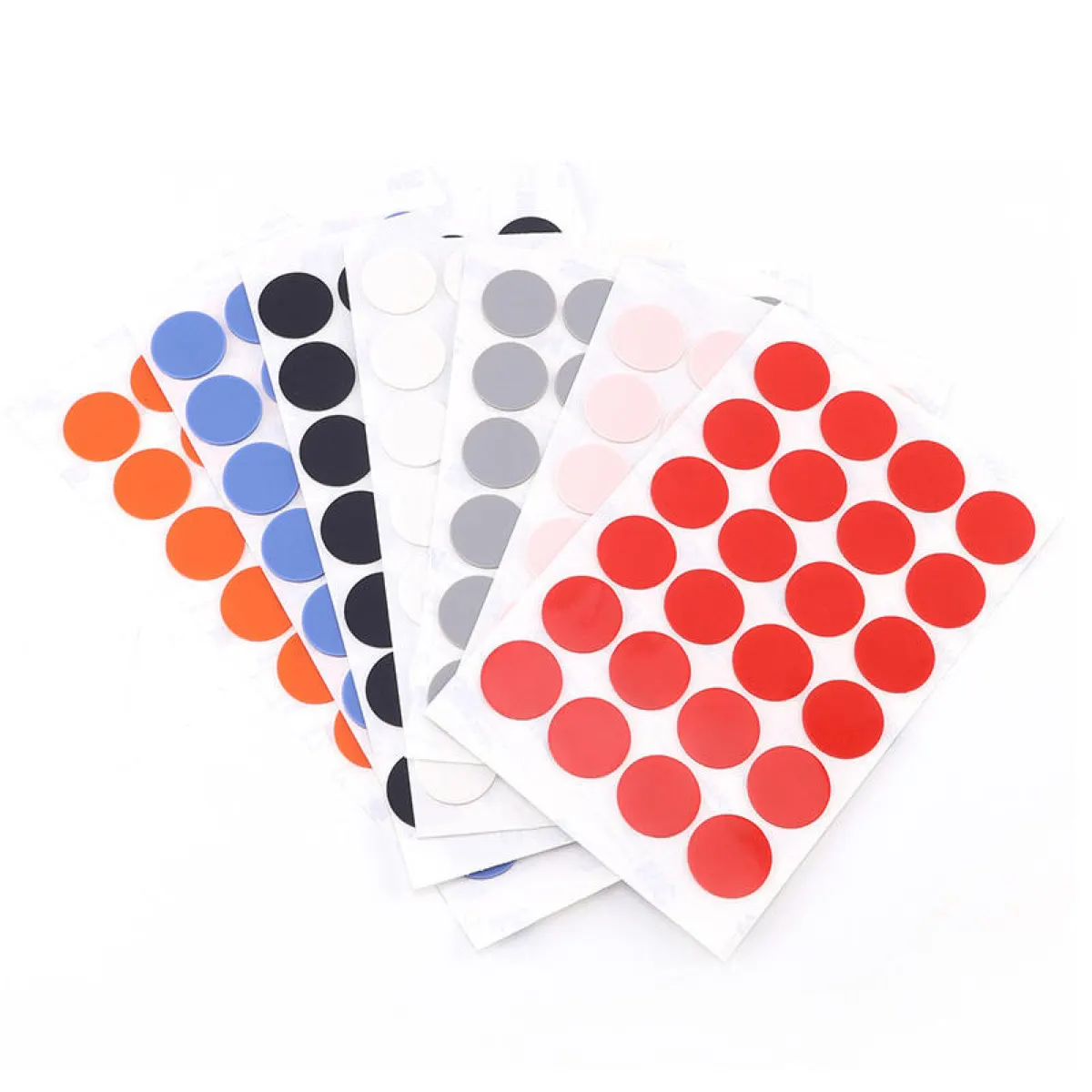
| Die-cut sheet pad | Cut from silicone sheet to any outline | Appliance feet, furniture, display fixtures |
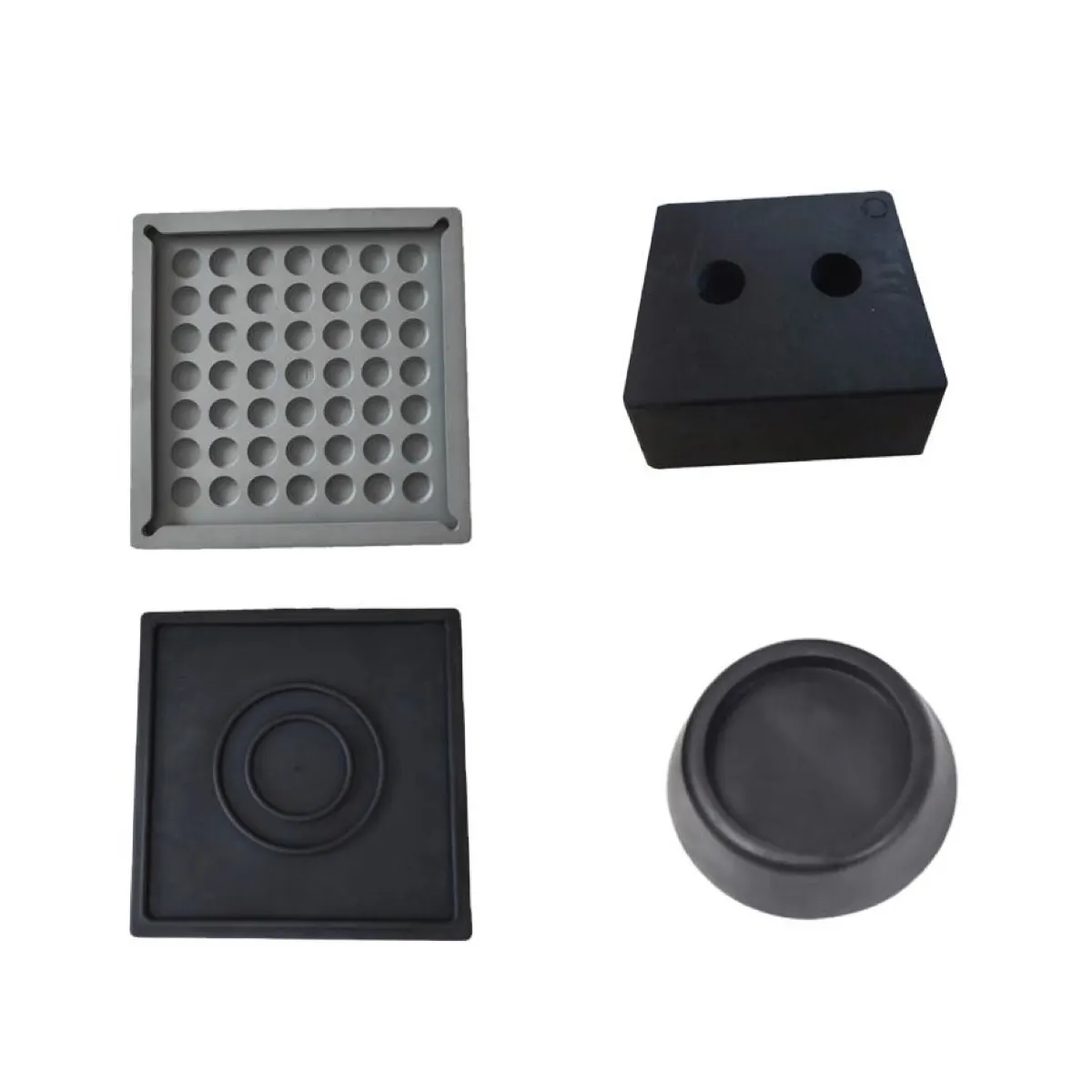
| Molded round foot | Molded to the drawn outline | Audio equipment, instruments, small machines |
| Molded square foot | Molded block to the drawn outline | Office equipment, vending machines |
| Hollow foot | Molded with an internal cavity for softer damping | Printers, copiers, sensitive instruments |
| Adhesive-backed pad | 3M self-adhesive backing on a die-cut or molded pad | Retrofit feet, panels, shelves |
| Through-hole pad | Die-cut or molded with clearance holes | Equipment bolted through the pad |
| Food-contact pad | Food-contact silicone grade, molded or die-cut | Medical, laboratory and food-adjacent equipment |
## Material selection
Only silicone appears in this line, deliberately: it covers -60°C to 200°C, resists UV and aging, and comes in food-contact grades. Within that, hardness from Shore A 20 to 70 does the tuning. Soft pads conform to uneven floors and take light loads; firm pads carry heavier cabinets without bottoming out.
A pad too thin has nowhere to deflect, and one too small for the load will take a set no compound can recover from. Thickness and contact area are therefore specified with the weight per foot, not guessed.
Food-contact grades serve medical, laboratory and food-adjacent equipment, while outdoor feet on solar and telecom gear use the same silicone for UV and aging resistance, with through-holes or a slot fit where the surface will be wet.
With 3M self-adhesive backing, the surface matters as much as the rubber: paint, dust and oil reduce bond strength, and a mechanical fixing is safer on equipment that gets moved.
## How it is made
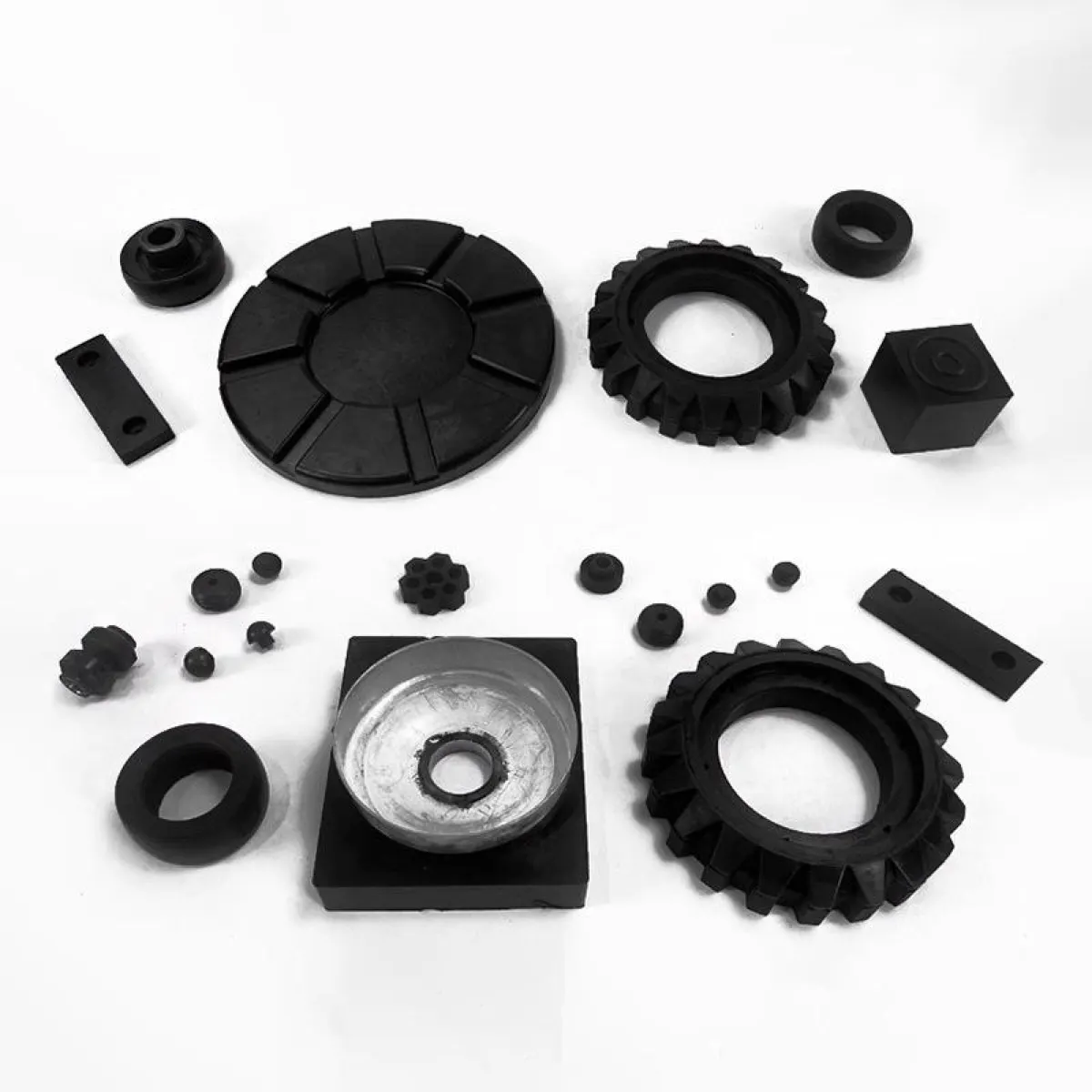
Pads are die-cut from silicone sheet when the outline is flat and the thickness is standard, or molded when the part needs a hollow cavity or a molded logo. Molded feet come out of a tool that also sets the surface finish.
3M backing, through-holes, threaded inserts and slot fits are added after molding or cutting. Matte or glossy finish, Pantone color and molded or printed logos are decided at the sample stage. Tooling is quoted in 7 days and samples follow in 7–12 working days.
## Where it is used
Home appliances take the largest share: washing machines, dryers and dishwashers use pads to stop walk and cut drum noise. Audio equipment and precision instruments use soft, thick pads for decoupling; office printers and copiers use molded feet that survive repositioning. Furniture and display fixtures use thin die-cut pads as silencers, medical and laboratory devices use cleanable food-contact grades, vending and gaming machines use pads that resist constant kicking, and solar, telecom and outdoor cabinets use UV-stable feet. Larger impacts at door frames or stroke ends call for bumpers rather than a pad.
## Quality and documentation
Pads run under ISO 9001, ISO 14001 and IATF 16949 systems, from compounds compliant to RoHS and REACH. Inspection covers incoming material, in-process checks and 100% visual final inspection. Material certificates ship with every order and batch traceability is kept; test reports are available on request.
## What to send for a quote
Send a drawing or a sample, the load per foot, the gap you need to fill, the floor surface, and whether the pad is adhesive-backed or mechanically fixed. State the quantity, target price and any standard. If the equipment runs hot or is steam-cleaned, say so; it changes the compound shortlist before a sample is cut.