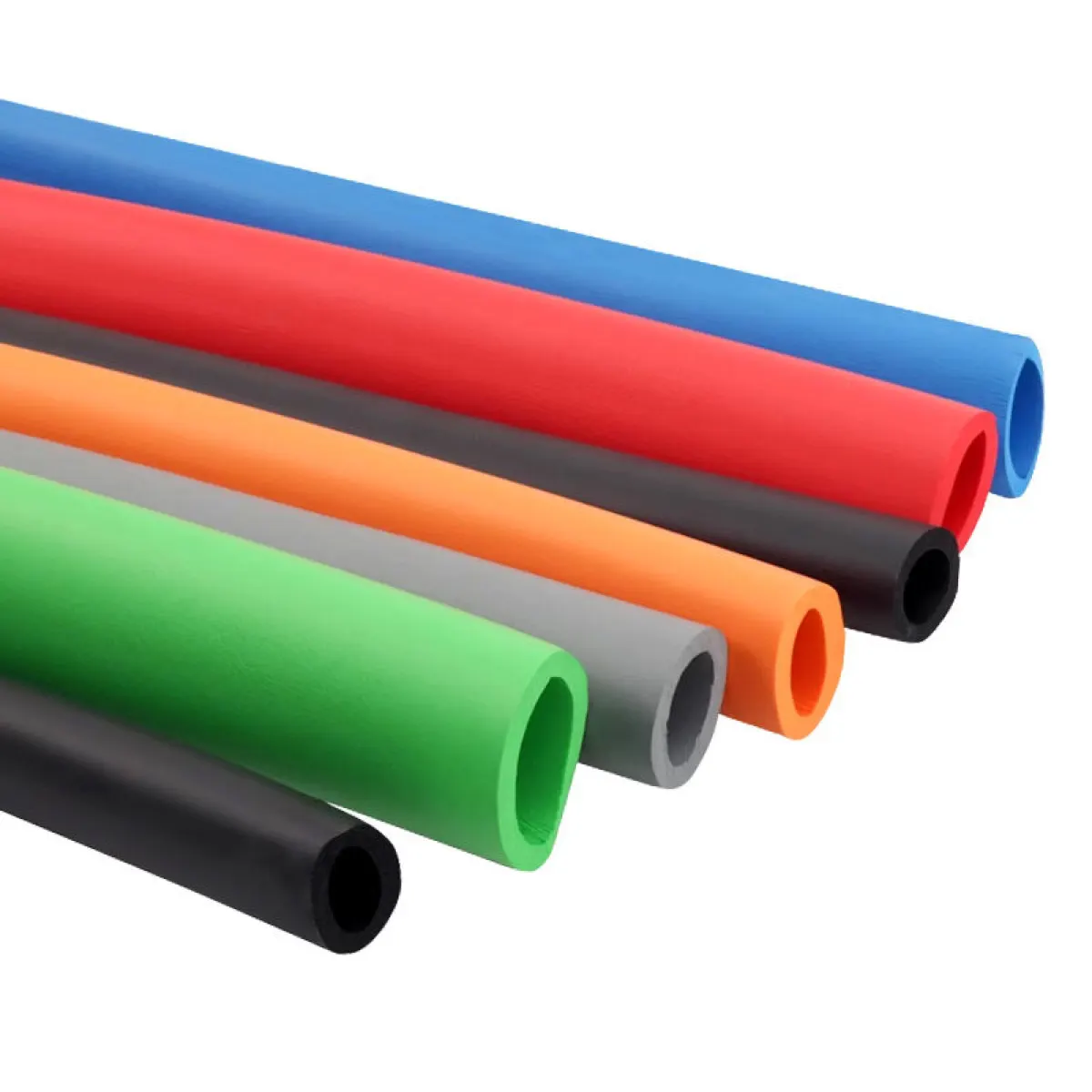
An industrial rubber hose is a flexible pressure pipe. An oil-resistant liner touches the medium, one to six layers of fiber or wire braid carry the pressure, and a weather-resistant cover takes the abrasion. The hose holds a fluid at pressure while bending, coiling and following a moving machine without kinking at the couplings.
Hose fails in a few recognizable ways. The cover checks and cracks after long ozone and UV exposure; the liner swells or hardens in the wrong oil; water reaches the braid under a damaged cover and the wire corrodes. Abrasion on mining and construction equipment wears through the cover first, then the braid. A coupling pulls off when the crimp does not match the braid, and a pinhole in the liner becomes a burst at working pressure. Most are specification failures, not manufacturing ones, so media, working pressure and routing are settled before a compound is chosen.
Catalog hose covers a narrow band of those conditions. Custom production starts when bore, length, pressure, end fittings or cover color fall outside the stock range, or when one hose must survive a medium and a routing no catalog item handles.
Variant range
Four variables define the range: liner compound, braid type and layer count, cover, and cut length or coupling. These are the combinations we build most often.
| Variant | Construction | Typical use |
|---|
| Hydraulic hose, wire braid | NBR liner, wire braid, black abrasion-resistant cover | Construction and agricultural machinery hydraulics |
| Hydraulic hose, fiber braid | NBR liner, fiber braid, flexible cover | Tight routings with a small bend radius |
| Fuel and lubricant hose | NBR liner, fiber or wire braid | Fuel and lubricant transfer lines |
| Steam hose | EPDM liner and EPDM cover | Steam service, with an ozone- and UV-resistant cover |
| Water and washdown hose | EPDM liner, weather-resistant cover | Industrial water lines, marine washdown |
| Chemical and air line hose | EPDM or NR liner, fiber braid | Weak chemicals, plant air and water |
| Sandblasting and bulk material hose | Abrasion-resistant cover, fiber braid | Sandblasting, bulk material and slurry lines |
Material selection
The liner is the only layer touching the medium, so it sets what the hose carries. NBR handles mineral oils, hydraulic fluids, emulsions, fuel and lubricants. EPDM takes water, steam and glycol, and an EPDM cover resists ozone and UV without cracking, so the same compound serves outdoor washdown and marine duty. NR covers general service, including plant air and water lines.
The braid sets the pressure: working pressure rises with the number of fiber or wire layers, from 5 MPa to 40 MPa in hydraulic grades. Wire braid takes the high end and tight bend radii; fiber braid keeps the hose light and flexible where the duty allows.
Cover choice is a site question, not a media question: black, red or blue, weather and abrasion resistant as standard, EPDM where UV and ozone are present. Abrasion resistance lives in the cover, so mining and construction duty specifies a heavier cover rather than a different liner.
How it is made
Production starts with the liner, extruded to the bore and wall on the drawing. The braid is applied over it in one to six layers of fiber or wire, and the cover is extruded over the braid so the layers bond into one wall. The hose is cut to length and fitted with couplings where ordered; couplings can also ship loose.
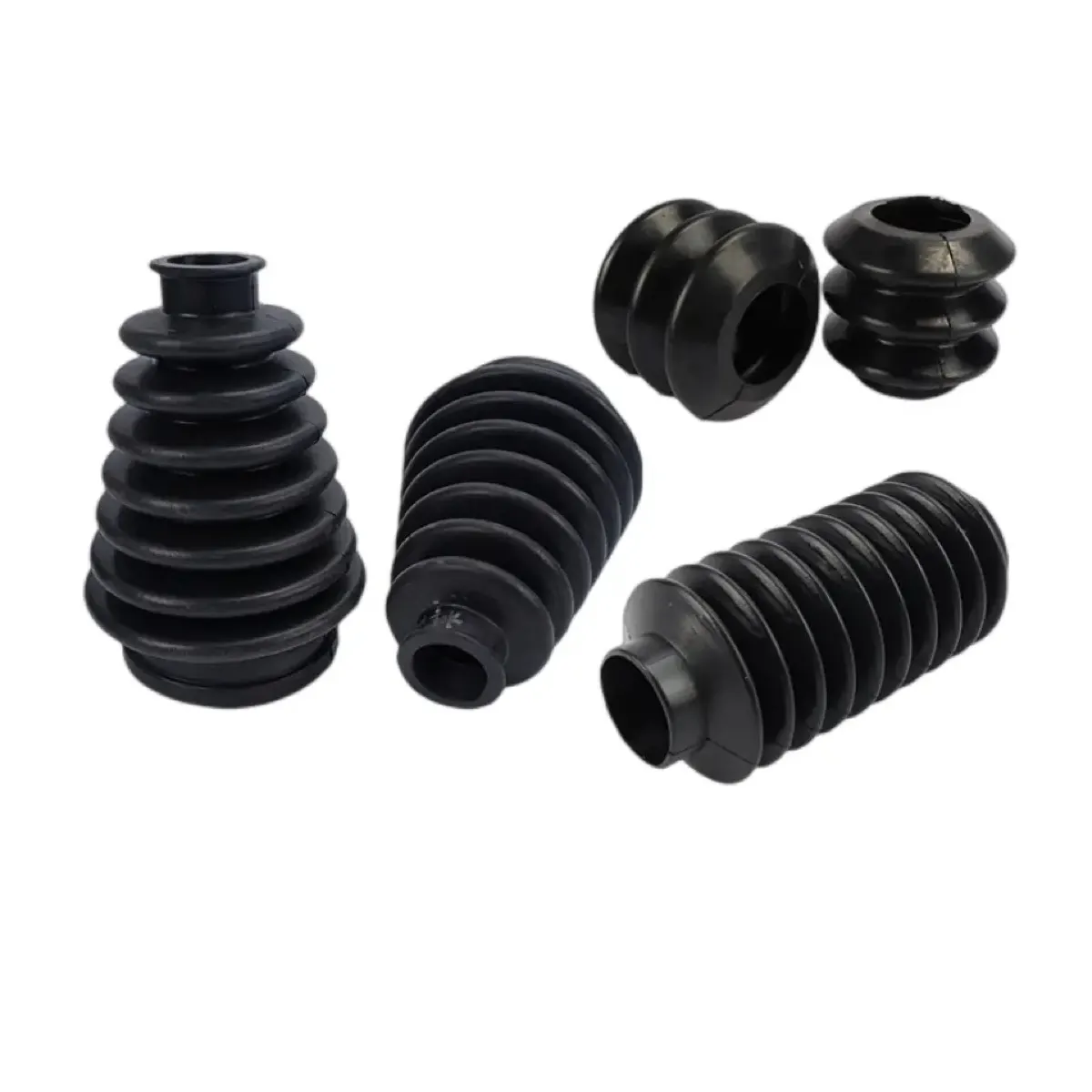
Tooling is quoted in 7 days and samples follow in 7–12 working days. The first sample is checked against the drawing before release, and every shift is checked in process. Where a line needs to absorb movement rather than carry media, rubber bellows take that duty.
Where it is used
Construction and agricultural machinery take the largest share: boom cylinders, loader arms, backhoe circuits and implement lines, all short runs at pressure with tight bends. Fuel and lubricant transfer lines follow on trucks, gensets and fuel depots. Process plants use it for weak chemicals, plant air and water; steam hoses run on EPDM liner and cover.
Mining and tunneling use water, air and slurry lines where the cover is dragged over rock; sandblasting and bulk material handling demand the abrasion-resistant build. Marine and shipyard work adds salt, UV and washdown, which is EPDM cover territory. For low-pressure transfer, silicone tubing is the lighter option.
Quality and documentation
Hose is produced under ISO 9001, ISO 14001 and IATF 16949 systems, from compounds that meet RoHS and REACH. Compound and braid are checked on receipt, the build in process, and every length gets 100% visual final inspection. Material certificates, first-article reports and per-shift records travel with the order, and pressure test reports are issued on request.
What to send for a quote
Send the medium, working pressure, bore, length and end fittings, and name the standard — SAE, DIN or EN. Cover color, bend radius and the environment decide the rest. Add the annual volume, target price and documentation needs, and we return a compound, braid construction and quote. Send a drawing or sketch with those numbers and we will return the hose, couplings and tooling as one quotation.