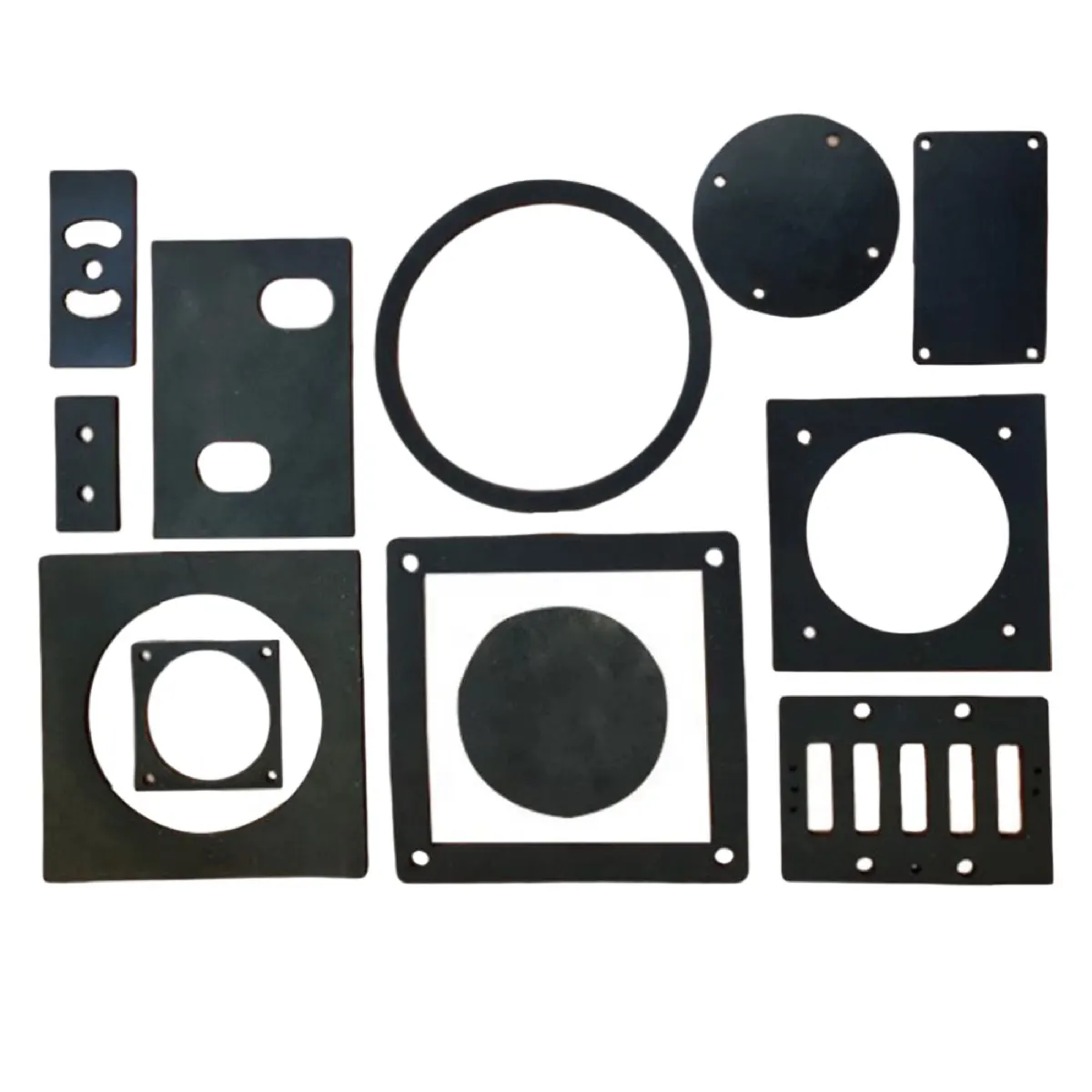
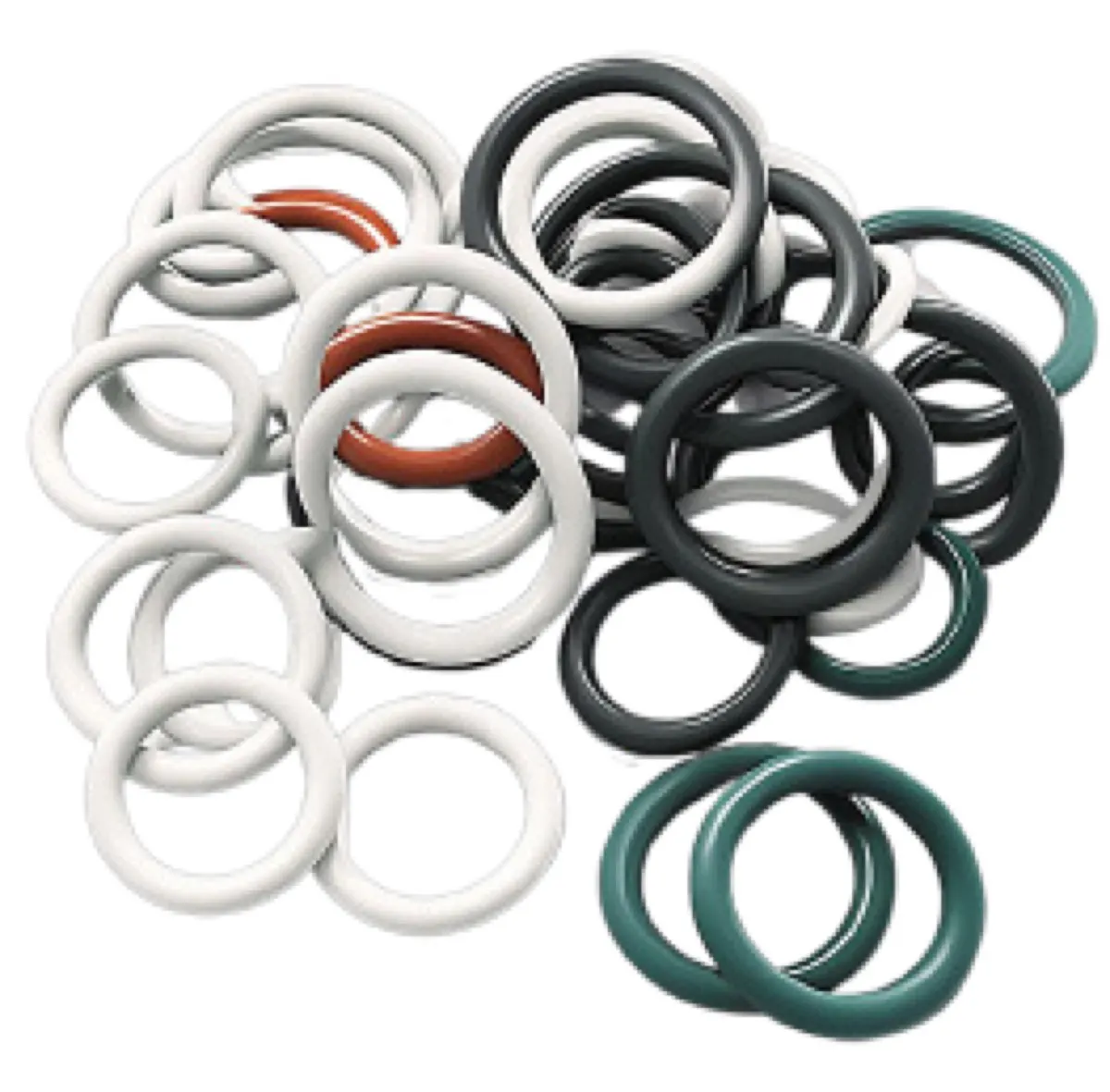
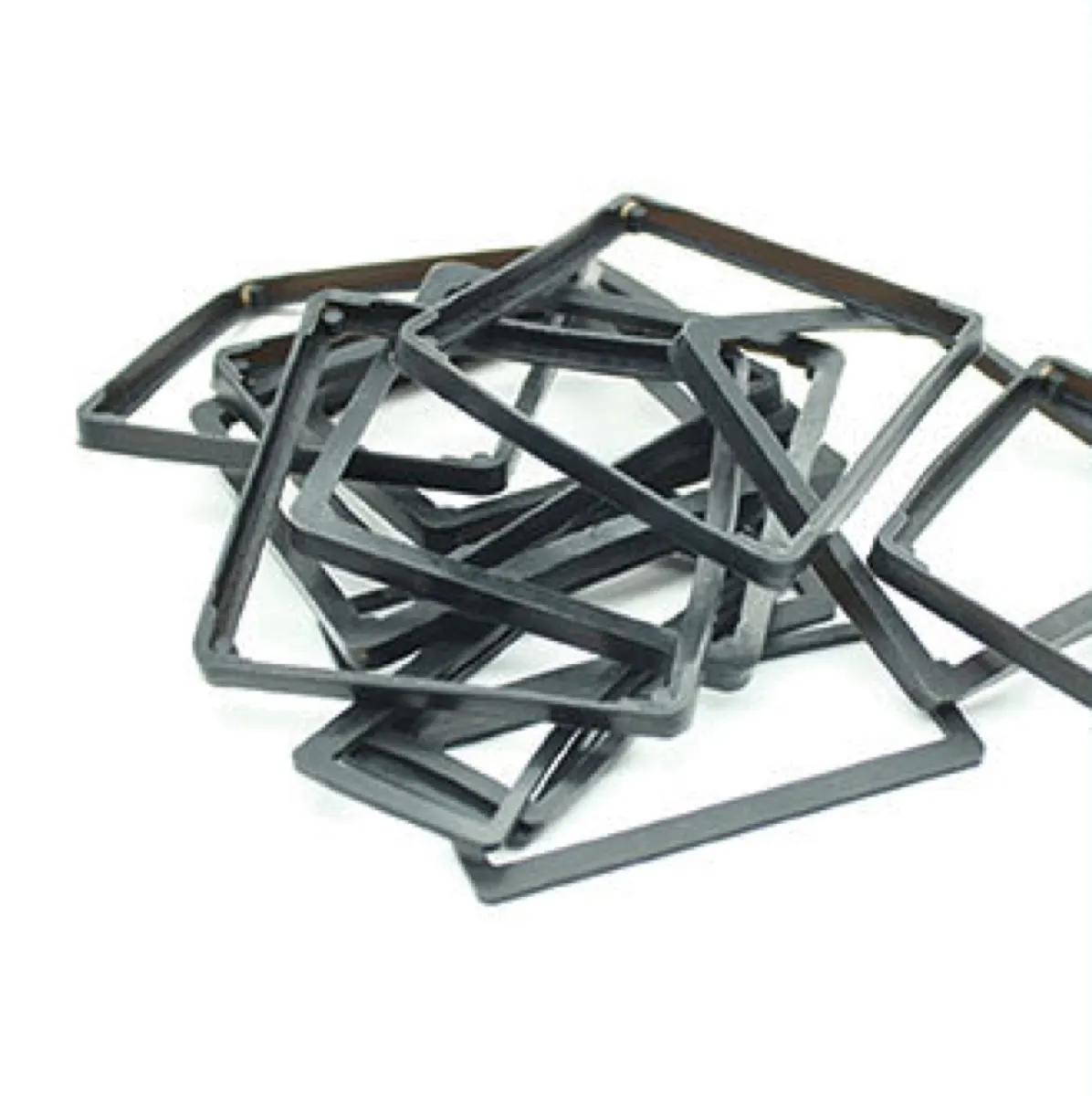
A gasket is a static seal: it is clamped between two flat faces and stays there. The elastomer is squeezed by the joint, flows into the surface irregularities of both faces, and blocks water, dust and gas along the contact line. Unlike an O-ring it has no groove to sit in, so the design starts from the flange — how wide the sealing land is, where the bolts sit, and how much compression the joint can deliver evenly.
Failure is rarely the material alone. Leak paths open where bolt spacing leaves the flange unsupported, where the gasket is too thick for the available compression, or where a cut-out for a port relieves the sealing land. Compression set takes the rest: a compound that relaxes at temperature stops recovering, and the joint weeps on the second thermal cycle. Outdoors, UV and ozone embrittle the exposed edge.
Sheet stock and a knife work for a prototype. Custom die-cutting or molding becomes the right answer when the part must hold its shape over repeated cycles, when thickness has to be controlled to a tolerance, or when a molded bead is needed. It is also the only route when the compound must match a specific medium or be supplied as an FDA grade.
Variant range
The same compound can arrive as a flat cut part or as a molded profile, so the variant follows the joint rather than a catalog.
| Variant | Construction | Typical use |
|---|
| Die-cut flat gasket | Cut from molded sheet to drawing or template | Flanges and covers with a flat land |
| Waterjet-cut gasket | Cut from sheet without a steel die | Low volume, large parts, iterations |
| Compression molded gasket | Molded to a 3D profile or raised bead | Thick sections and defined compression stops |
| Sponge gasket | Soft sponge sheet or profile | Low closing force covers and doors |
| Solid gasket | Dense sheet in silicone, EPDM, NBR or FKM | Bolted flanges with real clamp load |
| Adhesive-backed gasket | 3M backing on one face | Assembly on vertical or overhead surfaces |
Material selection
EPDM is the outdoor and water grade: rain, steam and UV leave it alone, which makes it the usual choice for enclosure doors and HVAC joints. NBR is specified for oils and fuels and is the economical answer for automotive pans and covers. FKM covers heat and chemical exposure where the other two would harden or swell. The line covers −70°C to 250°C depending on material, and silicone is the default where food contact or a wide thermal cycle is involved.
Sponge and solid constructions solve different problems. Sponge seals at very low closing force and tolerates a poorly controlled gap, which suits doors closed by hand. Solid sheet takes real clamp load and holds it, which is what a bolted flange needs. Hardness runs Shore A 20–90, with sponge grades softer than solid, and compression set resistance matters more than nominal hardness once the joint runs hot.
How it is made
Die-cutting is the workhorse: a steel-rule die is cut to the drawing, mounted, and the sheet is punched in one stroke. Waterjet cutting handles low volumes, large parts and design iterations without a die, which makes it sensible for a first article. Compression molding produces the thick sections and raised beads a flat sheet cannot deliver.
Tooling quotes come back in 7 days and quotations within 24 hours, with samples in 7–12 working days and the tooling fee refunded after the agreed volume. Incoming material, in-process checks and a 100% visual final inspection run on every order.
Where it is used
Pump and valve flanges are the classic application, where a die-cut ring in NBR or FKM sits between two machined faces. Electrical control cabinets and junction-box doors use the same material as a flat or sponge gasket, often with adhesive backing so it stays put during assembly. Filter and housing gaskets, automotive pan and cover gaskets, and outdoor enclosures rated for dust and rain make up a large share of the work.
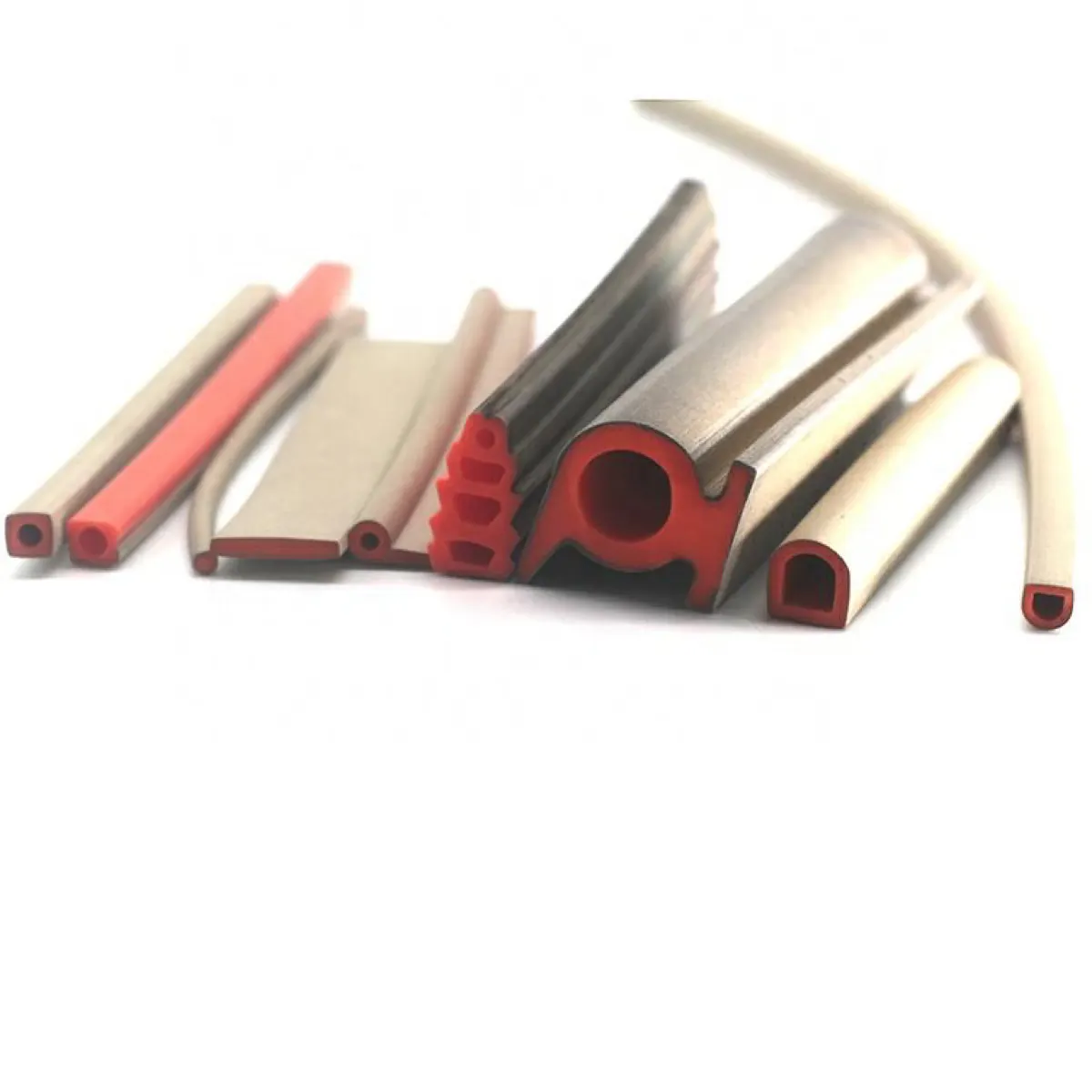
Water treatment brings filter housings and pipeline joints where EPDM is the usual answer. HVAC air handlers, fan housings and duct flanges use die-cut and molded parts in the same compound, frequently alongside an extruded seal or strip on the access door.
Quality and documentation
Production runs under ISO 9001, ISO 14001 and IATF 16949, with compounds compliant to RoHS and REACH and FDA grades available where the application calls for one. Inspection covers incoming material, in-process checks and a 100% visual final pass. Material certificates with batch traceability accompany every order, and test reports are issued on request.
What to send for a quote
Send the drawing with tolerances on thickness, hole positions and the sealing land, plus the material and hardness in Shore A. Tell us the medium, the operating temperature, the annual volume and the target price, and say whether an FDA grade is required. A sample or template of the mating face replaces a drawing when a part is being reverse-engineered.
Send a drawing, sample or template, and an engineer will reply within one business day with a material recommendation and a tooling quote.