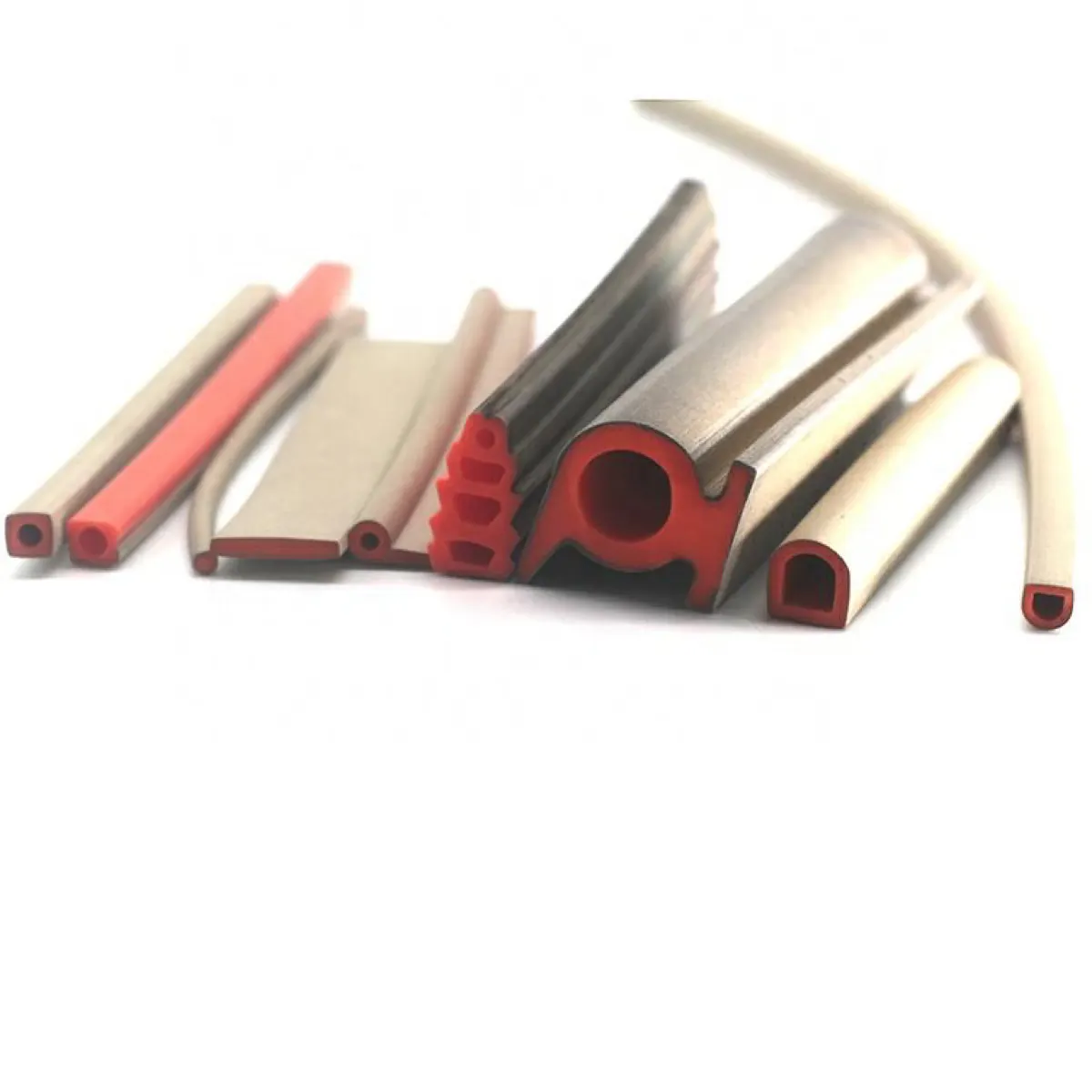
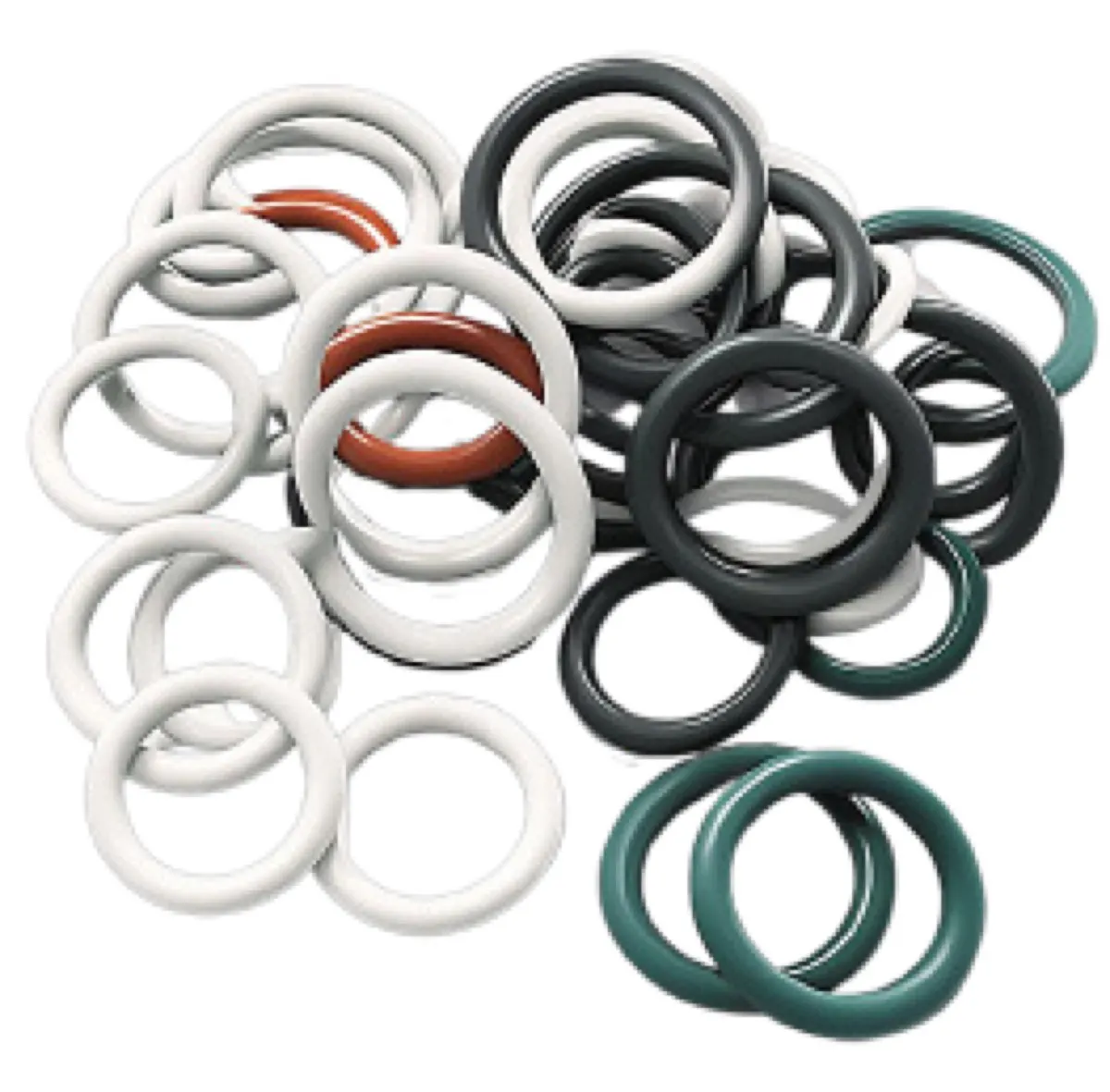
A seal or strip closes the gap between a door, cover or panel and its frame. The profile is compressed when the joint shuts, and the sponge or hollow bulb stores the deformation energy that keeps dust, water and noise out over thousands of cycles. A profile that is too stiff will not close; one that is too soft takes a permanent set within a season.
The failure modes are predictable. Compression set flattens the bulb until the door no longer seals at the latch side. Adhesive failure lets the strip peel at the corners, where peel stress is highest. UV and ozone crack the exposed skin on outdoor equipment, and an oversized profile gets pinched and sets on the first closing. Where a frame is joined from four lengths, a bad corner is the first leak.
Catalog profiles cover the common door and cabinet cases. Custom extrusion starts when the gap is not a standard one, when the frame has a radius the profile must follow, when a carrier is needed for stiffness, or when the strip has to arrive as a welded frame rather than a coil.
Variant range
The line is built around extrusion, so the section can be developed for the gap instead of the gap being adapted to a catalog profile.
| Variant | Construction | Typical use |
|---|
| Bulb profile | Hollow or sponge bulb on a solid base | Doors and hatches with a wide sealing band |
| D-profile | D-section with a flat mounting face | Cabinet doors, access panels |
| P-profile | P-section clipping into a channel | Sheet-metal edges and thin frames |
| E-profile | E-section with several sealing lips | Gaps that vary with tolerance stack-up |
| Co-extruded hard/soft | Rigid base with soft sealing lip | Doors needing a locating edge plus a seal |
| Carrier-reinforced | Steel or mesh carrier in the profile | Long spans that must not stretch |
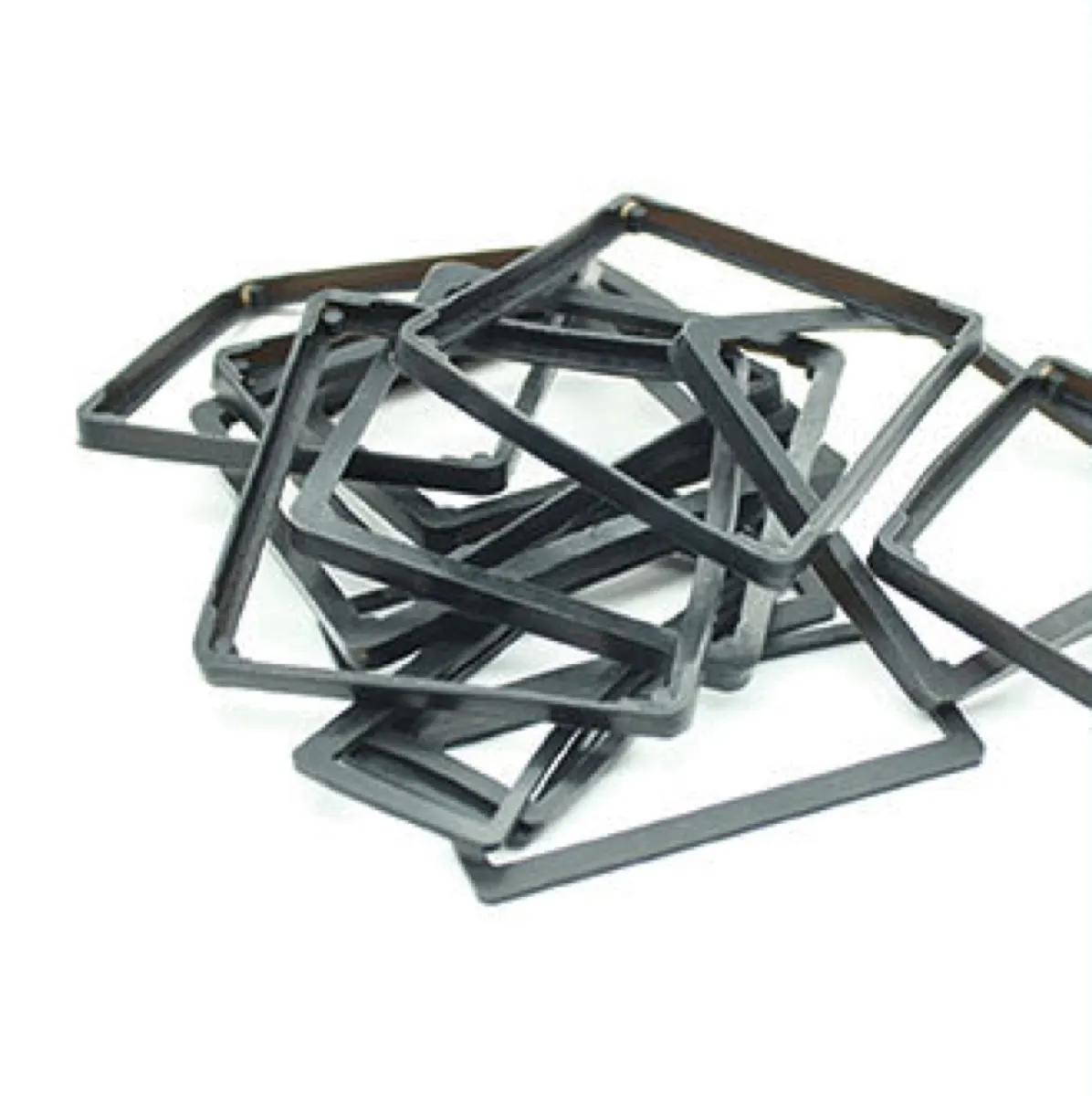
| Joined frame | Vulcanized corners, cut to size | Ready-to-fit frames for windows and enclosures |
Material selection
EPDM is the outdoor default. It takes UV, ozone and rain without cracking, and its range of −60°C to 200°C covers most building and equipment duty. Silicone covers the same window and is specified where a food-contact grade is required, or where the seal serves a cold-storage door. NBR is chosen for machinery and fuel areas where oil resistance matters more than weathering.
Construction matters as much as compound. A solid section holds its shape and resists compression set but needs real closing force. A sponge bulb seals against a light door and tolerates an uneven gap, which is why it dominates on enclosures. Co-extruded profiles put stiffness at the mount and softness at the seal, and a carrier stops a long strip stretching.
Hardness runs Shore A 30–90: soft compounds conform to a rough frame, harder ones resist being pushed out of the gap.
How it is made
The profile is extruded, cooled and cut to length, then either coiled for the customer to fit or joined into a closed frame with vulcanized corners. Co-extrusion runs two compounds through one die so the hard base and the soft lip bond in one pass, with a carrier fed through where needed. Cut coils suit long runs and site assembly; joined frames suit a line that wants to fit one part, not four.
Tooling quotes come back in 7 days and samples in 7–12 working days, with the tooling fee refunded after the agreed volume. Small batches are supported, which matters when a profile is proven on a first machine. A 100% visual final inspection runs on every order.
Where it is used
Industrial equipment accounts for a large share: vibration feeder and conveyor skirt seals, electrical cabinets, machinery doors and inspection hatches. Automotive work covers doors, trunks and window channels, where the profile survives weather and repeated slamming. HVAC ducting and clean-room joints use the same sections for air and dust control.
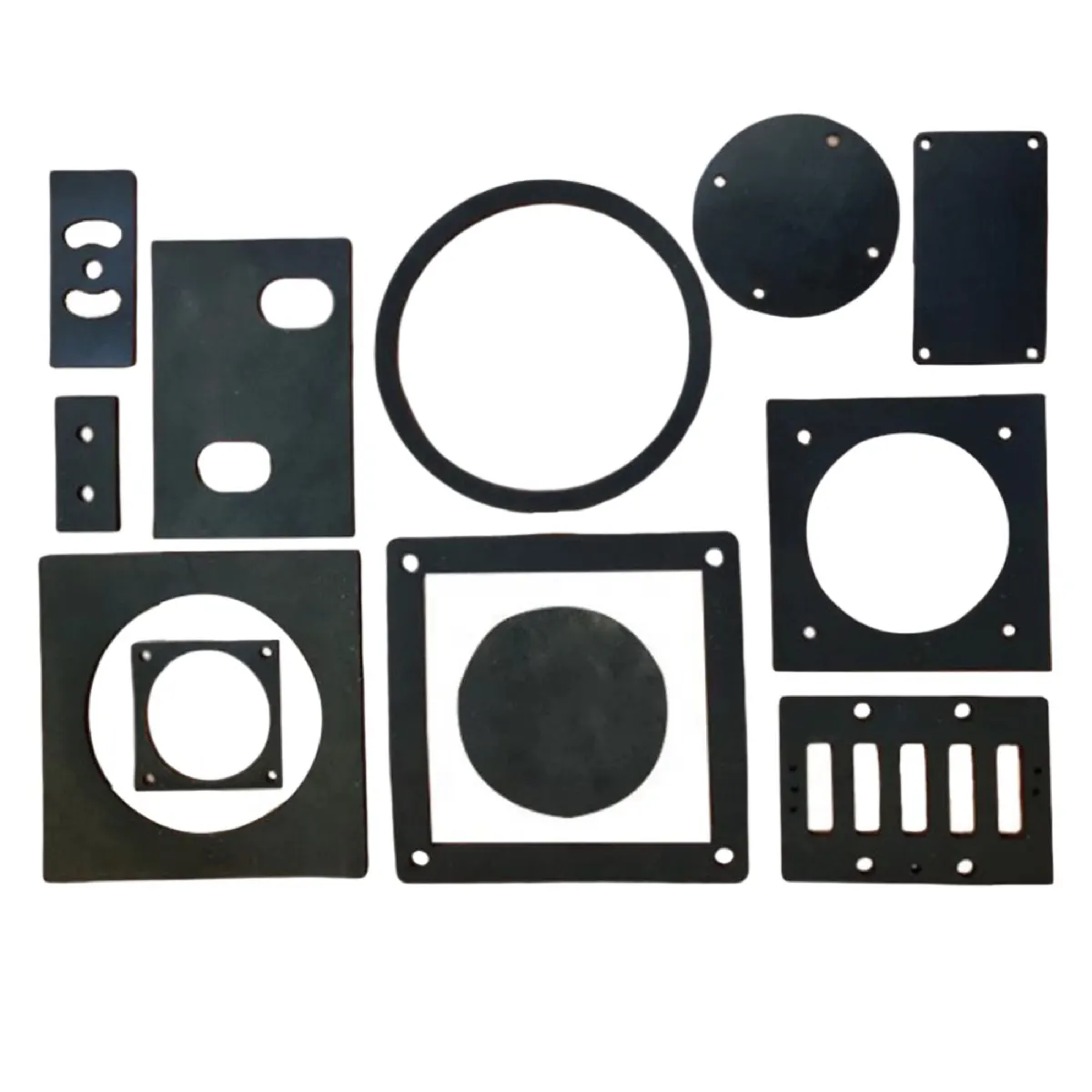
Shipping containers and outdoor kiosks need the weatherproof grades. Cold storage and food-processing door seals are specified in silicone or a food-contact compound, and the same profiles appear on windows, curtain walls and prefabricated building panels. Where the requirement is a flat face rather than a closing gap, a die-cut gasket is the better part.
Quality and documentation
Extrusion runs under ISO 9001, ISO 14001 and IATF 16949 systems with RoHS and REACH compliant compounds and food-contact grades available. Material certificates, first-article and per-shift checks and a 100% visual final inspection cover each order, with batch traceability back to the compound lot. Test reports on request.
What to send for a quote
Send the cross-section drawing or a cut sample of the profile, with the frame dimensions and the corner radius if the strip is to be joined. State the gap the seal must close, the mounting method, the hardness in Shore A, the color and whether a carrier is required. Add the annual length, the target price and the environmental exposure — indoor, outdoor, washdown or oil.
Send a drawing or a sample section, and an engineer will reply within one business day with a profile recommendation and a tooling quote.