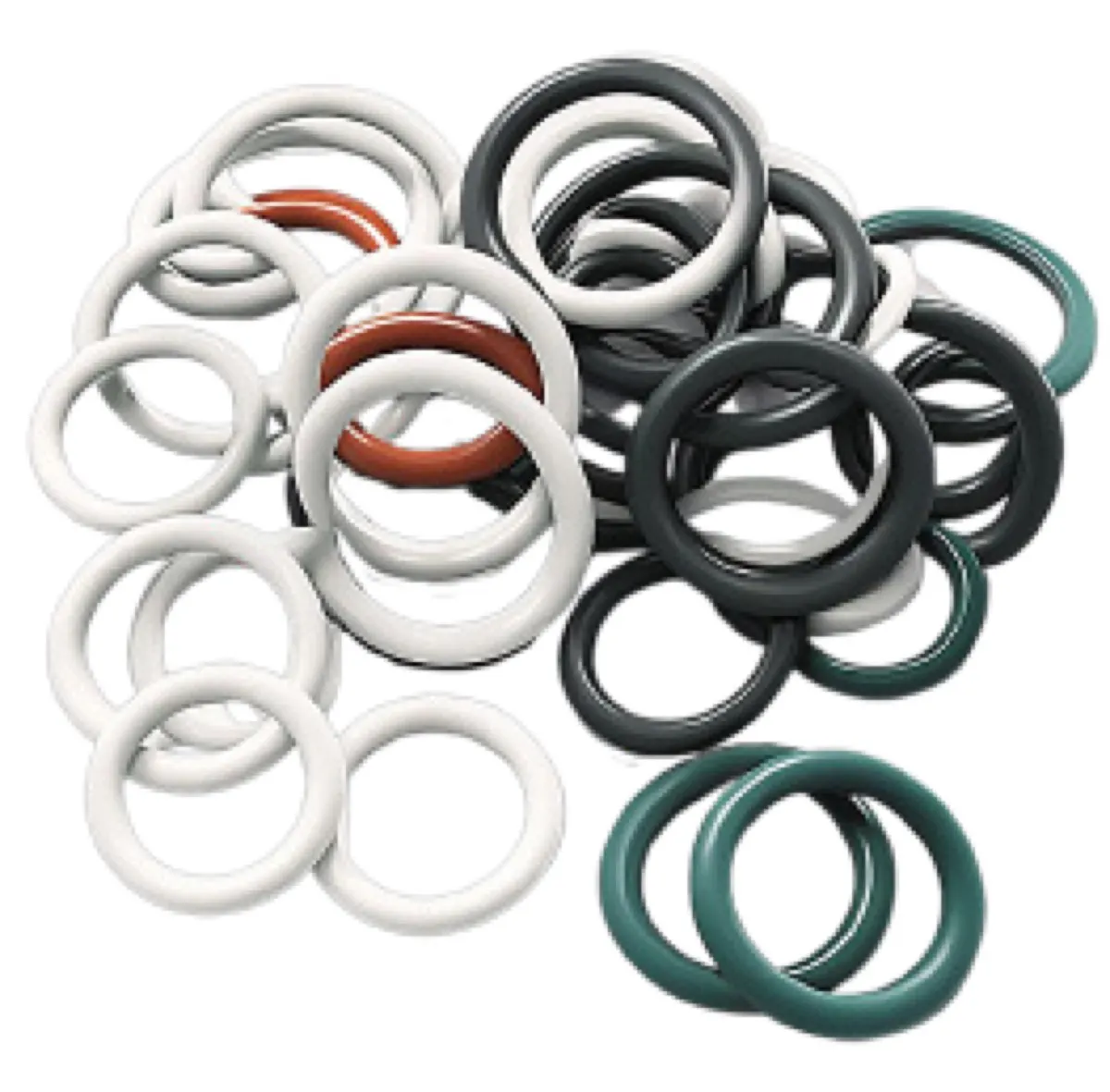
An O-ring is a small part that carries the reliability of a whole joint. It sits in a machined groove, is compressed 15–30% of its cross-section when the faces close, and seals by elastic recovery: the rubber returns toward its molded shape, and that stored force presses it against the mating surface. System pressure then pushes the ring toward the low-pressure side. The groove does most of the work, which is why a leaking O-ring is often a groove problem.
Compression set comes first among the failure modes: at temperature the compound relaxes into a permanent deformation and stops pushing back, so the joint weeps after a few heat cycles even though nothing has visibly broken. Extrusion follows when the gap is wide relative to hardness and the ring is sheared into the clearance. Chemical attack swells or hardens the surface. A cut lip from a sharp groove edge, or a ring twisted into a spiral during assembly, is the leak no bench test finds.
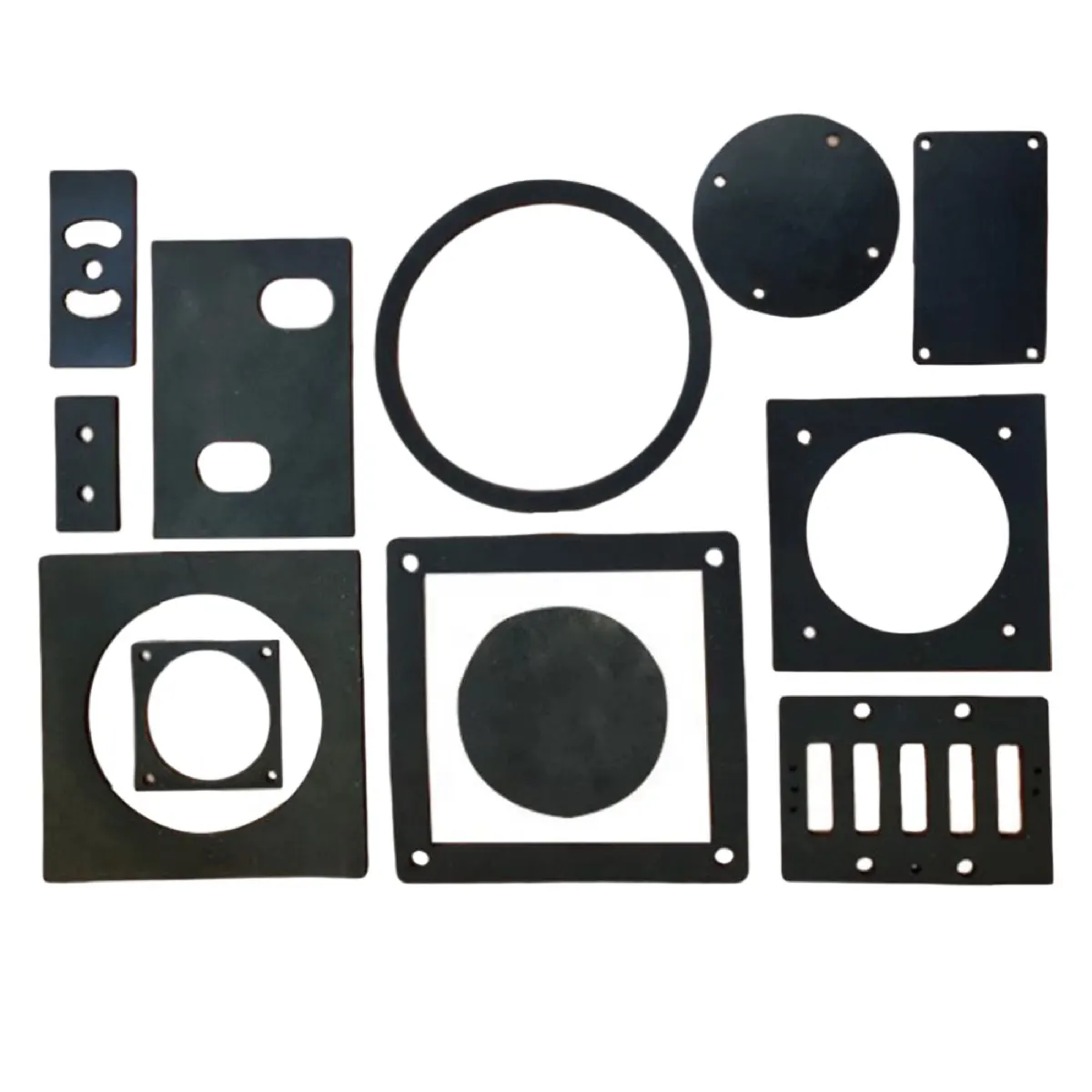
A catalog ring handles the ordinary case at the lowest cost. Custom tooling makes sense when the hardware was not designed around an O-ring: an imperial bore with a metric groove, a cross-section that must match an existing casting, or a color the line uses for identification. Where the joint is a flat flange rather than a groove, a custom gasket is the better answer.
Variant range
The line covers the standard series and the custom work around it, so most inquiries land on a row below without a new development project.
| Variant | Construction | Typical use |
|---|
| AS568 inch series | Molded to AS568 cross-sections | Repair and retrofit on North American equipment |
| ISO 3601 metric series | Molded metric bore and section | European and Asian machinery |
| Custom cross-section | Molded to drawing, ID 1–2000 mm, section 0.5–50 mm | Housings with no standard groove |
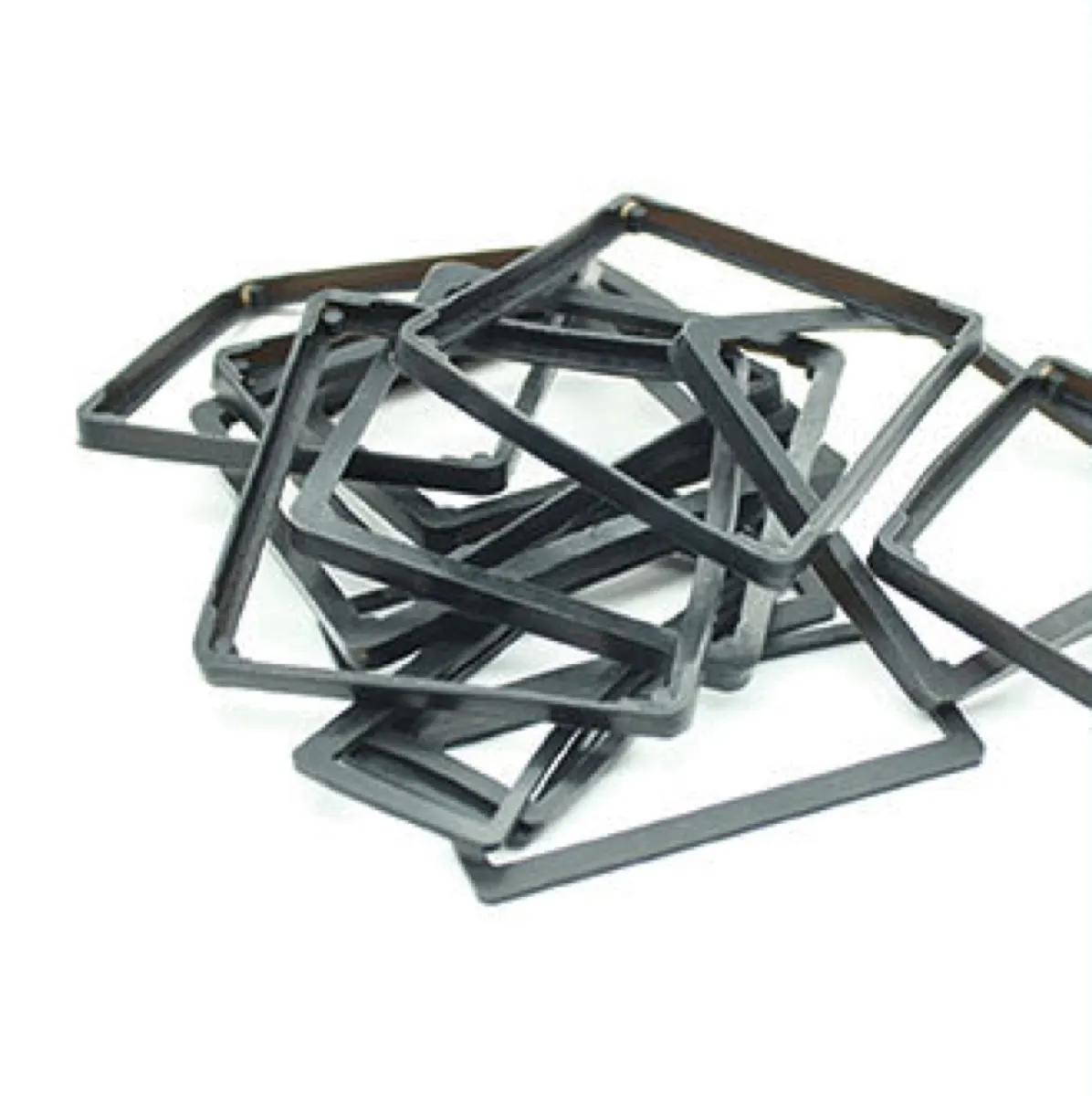
| Square and X-profile | Molded quad-ring or X-section | Rod seals where spiral twist is a risk |
| FEP/PFA overjacketed | Elastomer core inside fluoropolymer | Media that would swell the compound |
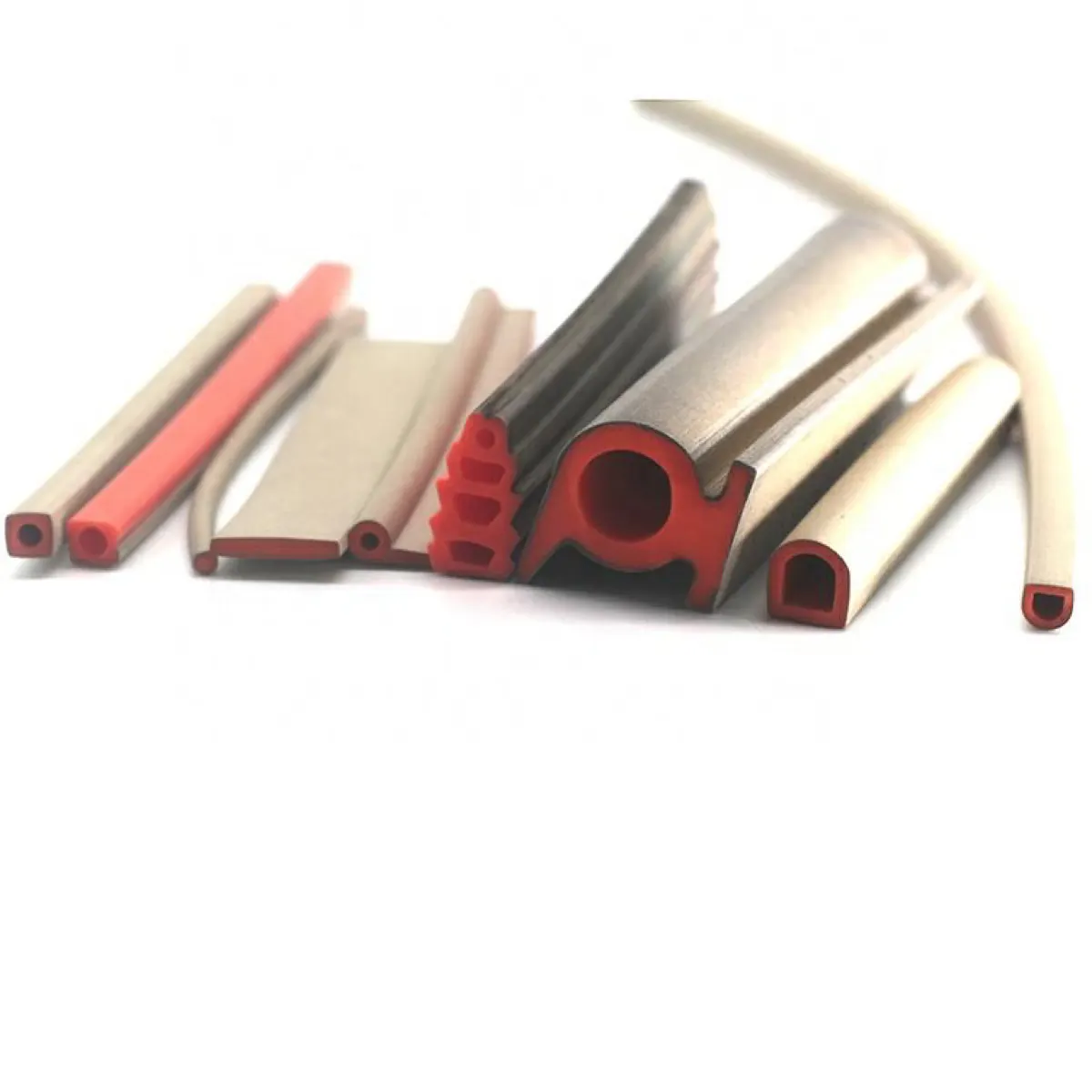
| Cut and spliced | Extruded cord, cut and spliced | Large diameters without a mold |
Material selection
Silicone carries the widest temperature window on the line, −70°C to 232°C, and is the grade specified for food and medical parts, where compounds are held to FDA 21 CFR 177.2600, USP Class VI and NSF 51 versions. It resists ozone and UV, but it is not a universal answer for fuels: where the medium is aggressive, the compound is matched against the media list before a drawing is released.
FKM covers fuels, oils and acids where silicone would swell. NBR handles mineral oils at lower cost and stays the default for hydraulic hardware. EPDM takes water, steam and UV, which makes it the outdoor grade, but it is not for petroleum oil. The medium decides the family, the temperature decides the grade inside it.
Hardness runs Shore A 30–90. Soft compounds seal at low closing force; hard compounds resist extrusion into a wide gap. Pantone color lets a line identify compound at a glance.
How it is made
Compression molding covers large diameters and moderate volumes. Injection molding suits small sections at high annual quantity. Extrusion with splicing reaches diameters that would need an impractical mold, and cutting serves cord stock. The process follows the drawing rather than the other way round.
Tooling quotes come back in 7 days and samples in 7–12 working days, with the tooling fee refunded after the agreed volume. First articles are measured against the drawing before the run is released, and the groove is checked at the same time.
Where it is used
Automotive work covers cylinder seals, cooling systems, fuel injectors and A/C lines, where the compound must survive both the fluid and the under-hood temperature. Medical devices use the same parts as syringe seals, ventilator circuits and pump fittings. Food and pharma equipment — filling machines, fermenters, reactor manway seals — is where the FDA and USP Class VI grades stop being optional.
Electronics is a growing share: IP67/IP68 sealing on controllers and connectors, often in the same housing as a waterproof and dust seal. Energy covers wind turbine main-shaft seals and solar trackers; hydraulics adds valve blocks, pump end caps and water-treatment filter housings.
Quality and documentation
Production runs under ISO 9001, ISO 14001 and IATF 16949. Compounds are RoHS and REACH compliant, and the food and medical grades are held to their own standards. Every lot ships with a material certificate and batch traceability; test reports are issued on request.
What to send for a quote
Send the drawing with tolerances — bore, groove width, groove depth and the cross-section you expect — plus the medium, the operating temperature and the hardness in Shore A. Add the annual volume, the target price and the applicable standard, AS568 or ISO 3601. A sample of the mating hardware is worth more than a paragraph of description.
Send a drawing or a sample, and an engineer will reply within one business day with a material recommendation and a tooling quote.