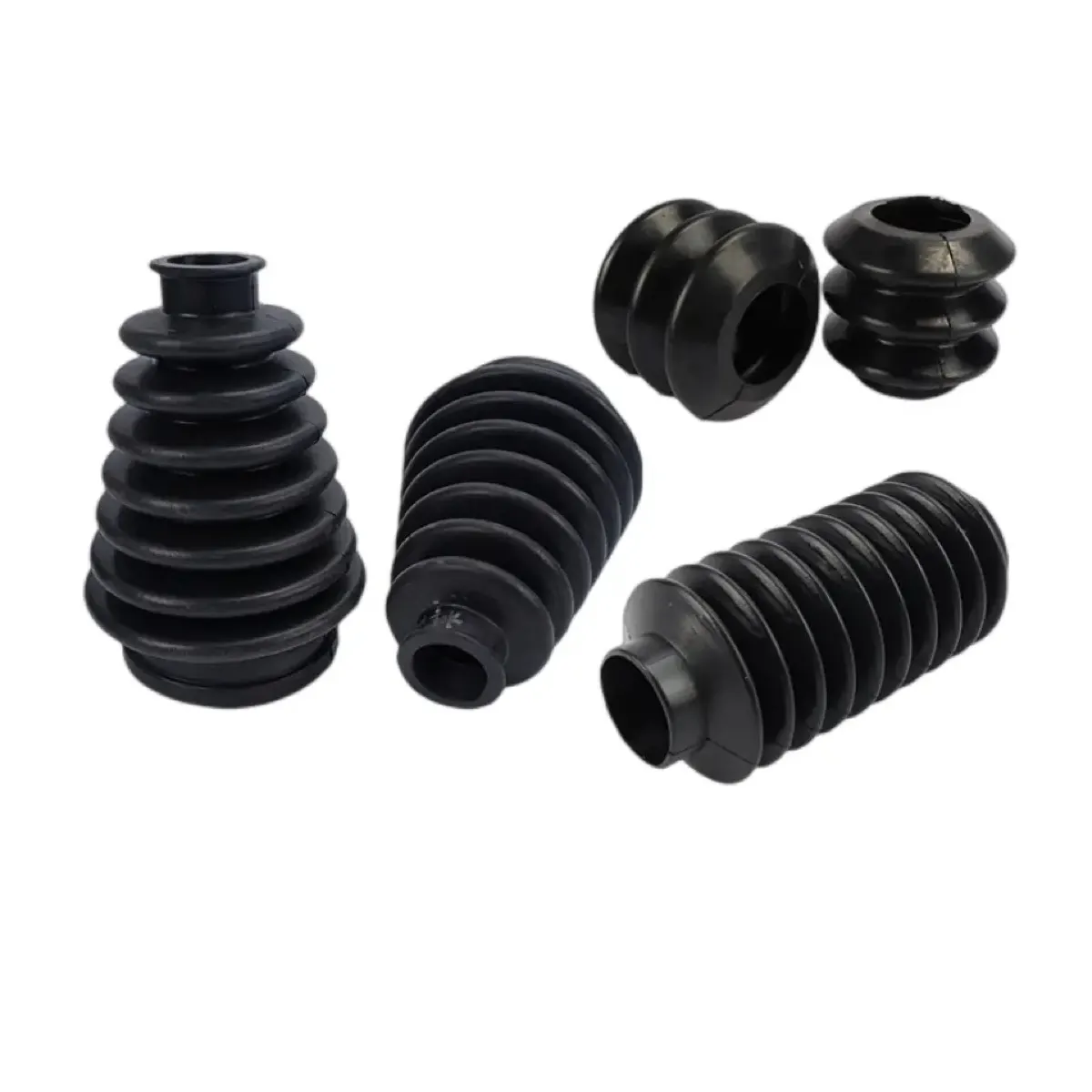
Flanged rubber expansion joints that absorb thermal growth, misalignment and vibration in water, HVAC and process pipework — integrally molded, reinforced at the connections, sized to your line.
A bellows expansion joint is the pipeline duty version of the same molded sleeve. Instead of protecting a shaft, it sits between two flanges and takes the movement the pipe generates: thermal growth along the run, lateral offset where supports settle, angular deflection at an offset connection, and the vibration a pump or compressor sends down the line.
What Separates a Joint From a Cover
A protective boot sees dust; an expansion joint sees pressure, vacuum and thrust. The wall is thicker, the convolutions are fewer and deeper, and the flange connections carry reinforcing rings where the thrust concentrates. Where the line runs at higher pressure or under vacuum, tie rods or limit rods take the thrust and stop the joint from extending beyond its rated movement.
Installation matters as much as the mold. Anchors and guides have to hold the pipe so the joint absorbs the movement it was sized for, rather than being stretched by the whole run. We size the joint from the movement and pressure you give us and state the installation conditions on the drawing.
Where Bellows Expansion Joints Fit
- Chilled and hot water lines: thermal expansion at equipment connections
- Condenser and cooling-tower piping: vibration isolation at pumps
- District heating and plant rooms: movement absorption in tight risers
- Chemical dosing and process lines: media-matched compound
- Marine engine intake and exhaust: misalignment and vibration together
Material Choice
EPDM covers hot water, steam and weathering to 130°C, NBR takes oils and fuels, neoprene handles ozone and refrigerants, and silicone reaches -60°C to 230°C for high-temperature or food-contact duty. Compounds are RoHS and REACH compliant.
What to Send for a Quotation
- Nominal bore, flange standard, drilling and face-to-face length
- Axial, lateral and angular movement to absorb
- Working pressure, vacuum and test pressure
- Media, concentration and operating temperature
- Whether tie rods, limit rods or a protective shroud are needed
Quotations within 24 hours, tooling quotes in 7 days, samples in 7-12 working days; every order ships with material certificates and 100% visual final inspection.
FAQ
When do I need tie rods on a rubber expansion joint?
When the pressure thrust would otherwise stretch the joint beyond its rated movement, or when the pipework has no anchors to take that thrust. Tie rods carry the load and let the joint work in lateral and angular movement only.
Can one joint absorb axial and lateral movement at once?
Yes, within limits — the combined movement is what we size against, not each direction separately. Send all three movements and the pressure and we will state the combined rating on the drawing.
How do I know which compound suits my media?
Tell us the media, concentration and temperature. EPDM is the default for water and steam, NBR for oils and fuels, neoprene for refrigerants and ozone, silicone for heat and food contact. We confirm the selection in writing with the quotation.